
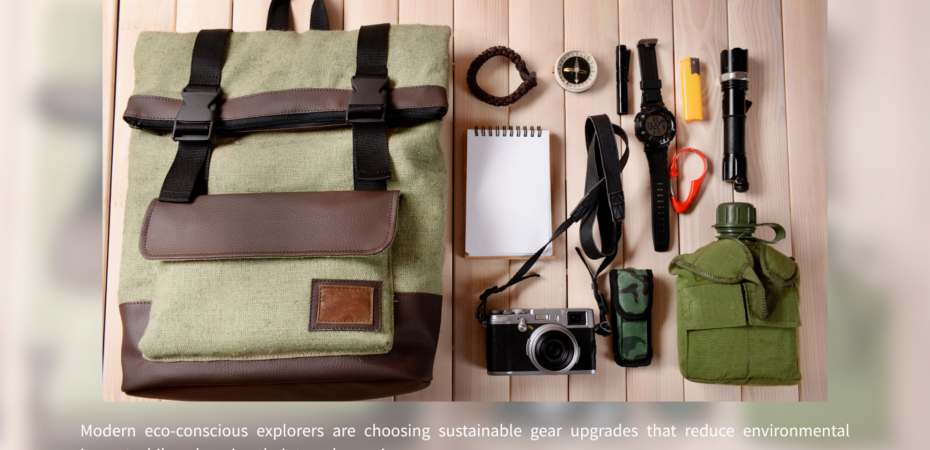
Travel has changed. More explorers now want to reduce their footprint while still experiencing the world fully. The cycle tourism market reached $159 billion in 2026 and continues growing as travelers choose human-powered exploration over carbon-heavy transport.
But sustainable travel requires more than good intentions. It demands gear that performs reliably, lasts for years, and minimizes waste.
The sustainable travel accessories market is projected to nearly double from $9.55 billion in 2026 to $19.41 billion by 2034, reflecting this shift toward eco-conscious equipment.
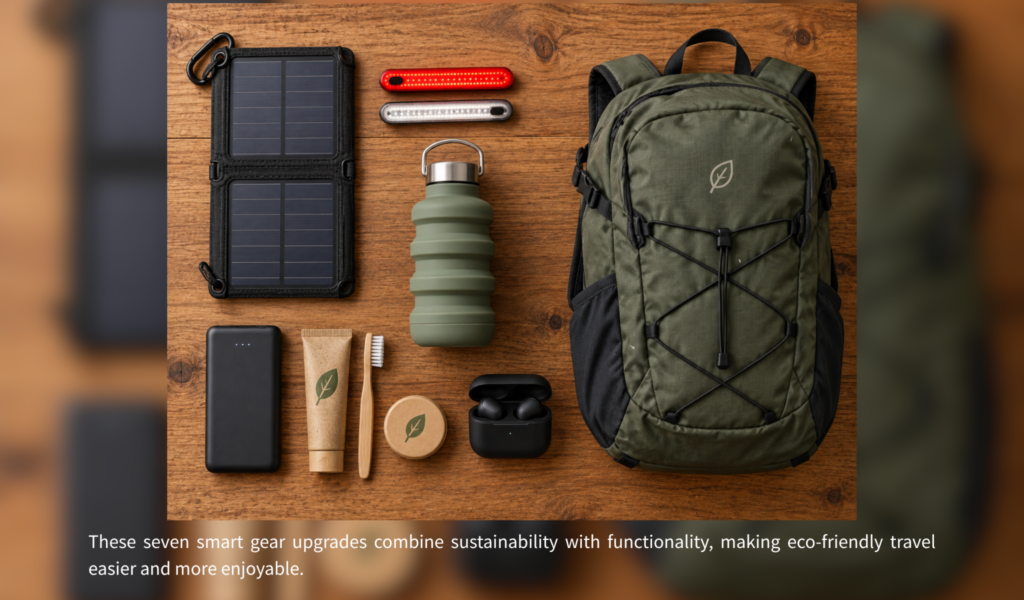
The right gear makes sustainable choices easier. Here are seven smart upgrades that help eco-conscious travelers explore further while treading lighter.
1. Rechargeable bike lights for night rides
E-bike rentals have become one of the fastest-growing segments in sustainable tourism, with the market projected to reach $8.56 billion by 2035.
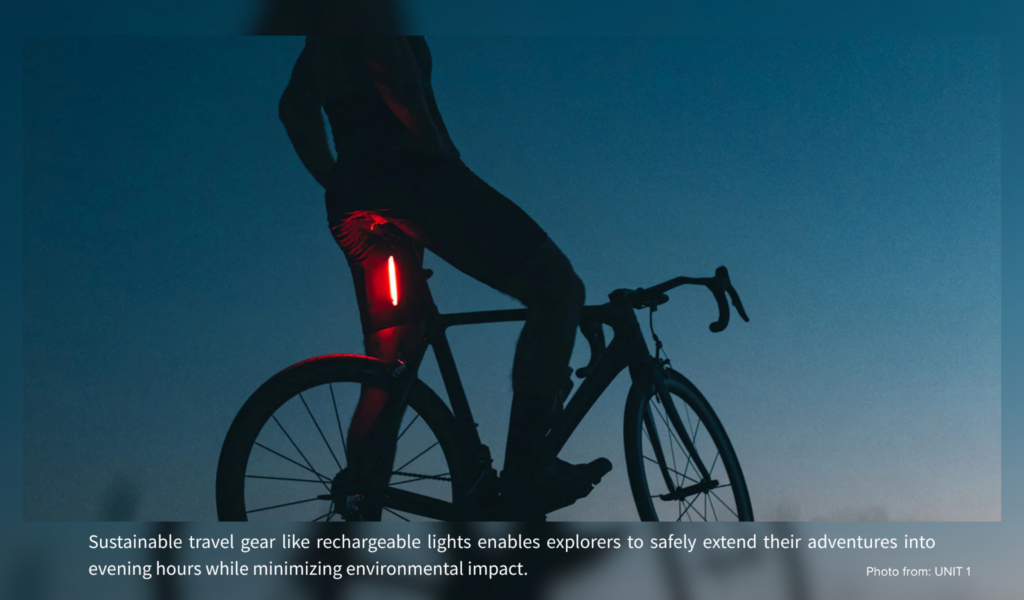
Whether you’re renting an e-bike in a foreign city or bringing your own touring setup, visibility after dark is non-negotiable for safety.
Traditional battery-powered lights create waste and require constant replacement. Modern rechargeable bike lights for night rides offer superior brightness, USB charging, and automatic sensors that adjust to ambient light conditions.
Look for models with at least 500 lumens for urban riding and 1000+ lumens for unlit paths. Many feature removable batteries that double as emergency power banks for phones.
The best systems integrate directly with helmets or handlebars, reducing theft risk and ensuring you always have illumination when exploring unfamiliar streets after sunset.
Best rechargeable bike lights: UNIT 1 Smart Light, a magnetic compact mount light built for everyday use.
2. Solar-Powered Portable Charger
Keeping devices charged during outdoor adventures traditionally means carrying heavy battery packs or hunting for electrical outlets.
Solar-powered chargers solve both problems. Modern panels are lightweight, weather-resistant, and efficient enough to keep phones, cameras, and GPS devices running during multi-day trips.
Look for models with at least 20W output and USB-C compatibility. Many fold into compact sizes that slip into backpacks without adding significant weight.
The best units include built-in battery storage, so you can charge devices even after sunset.
3. Collapsible Water Filtration System
Single-use plastic bottles represent one of travel’s most visible environmental problems. A quality water filtration system eliminates this waste while ensuring access to safe drinking water anywhere.
Modern filtration bottles remove bacteria, parasites, and microplastics from virtually any freshwater source.
Collapsible designs save space when empty, making them ideal for day trips and long hikes. Some models combine filtration with UV purification for added protection in areas with questionable water quality.
Consider capacity carefully. A 1-liter bottle works for urban exploration, while backcountry adventures benefit from 2-liter systems with quick-fill capabilities.
4. Packable Recycled-Material Daypack
Sustainable luggage has evolved far beyond hemp sacks. Today’s eco-friendly daypacks use recycled ocean plastics, repurposed billboard materials, and organic fabrics without sacrificing durability or style.
The key is packability. A daypack that compresses to pocket size means you can bring it on every trip without sacrificing luggage space.
Look for water-resistant coatings made without harmful chemicals, reinforced stitching at stress points, and comfortable straps that distribute weight evenly.
Many brands now offer lifetime repair programs, extending product life and reducing waste. This commitment to longevity matters more than any eco-friendly material claim.
5. Multi-Port USB-C Power Bank
Device proliferation is real. Phones, cameras, e-readers, headphones, and navigation gadgets all demand power. Rather than carrying multiple chargers, invest in a high-capacity USB-C Power Delivery power bank.
Aim for at least 20,000 mAh capacity for multi-day trips. This provides enough juice to recharge a phone 4-5 times or power a laptop for several hours. Dual or triple port models let you charge multiple devices simultaneously, crucial when you find that rare available outlet.
Check airline regulations before purchasing. Most carriers allow batteries up to 100Wh (roughly 27,000 mAh) in carry-on luggage without special permission.
6. Biodegradable Toiletry Kit
Conventional toiletries introduce harmful chemicals into ecosystems through wastewater and runoff. Biodegradable alternatives break down naturally without damaging soil or water systems.
Focus on concentrated formulas that reduce packaging waste.
Solid shampoo bars, toothpaste tablets, and deodorant creams eliminate plastic bottles entirely. Reef-safe sunscreen protects marine environments while preventing sunburn during outdoor activities.
Pack these items in reusable silicone containers rather than disposable travel-sized plastics. The containers last for years and prevent leaks that can ruin luggage.
7. Noise-Canceling Earbuds with Replaceable Batteries
Long flights, train rides, and bus journeys become more tolerable with quality audio. But disposable earbuds create massive electronic waste. Noise-canceling models with replaceable batteries offer a sustainable alternative.
Look for earbuds designed for repair rather than replacement.
Companies offering battery replacement programs and modular components extend product life significantly. Active noise cancellation reduces the need for high volume levels, protecting hearing during extended use.
Many models now include transparency modes for safety when cycling or walking in traffic, plus water resistance for all-weather reliability.
Making Sustainable Choices Stick
These seven upgrades represent more than gear swaps. They reflect a fundamental shift toward travel that prioritizes longevity, repairability, and environmental responsibility.
Each item on this list serves multiple purposes, reduces waste, and performs reliably across diverse conditions.
Sustainable travel gear only reduces environmental impact if you actually use it repeatedly rather than replacing it seasonally.
Start with one or two upgrades that match your travel style. The goal isn’t perfection. It’s progress. Every sustainable choice, no matter how small, contributes to a travel industry that values destinations rather than exploiting them.
 By Amey Myers


