

Turkey has become one of the busiest destinations for medical travel. Most guides compare procedure prices. Few explain what the whole trip costs. That gap is where travelers get caught out.
A surgery trip has two budgets. One covers the operation. The other covers everything around it — flights, nights, transfers, food, a companion, and the days you cannot work. This guide walks through both, so the number you plan around is the number you end up spending.
Key Takeaways
- A surgery trip carries two budgets: the medical package and the travel costs that sit outside it.
- All-inclusive packages in Turkey typically bundle the operation, hospital, recovery accommodation, transfers and aftercare into one price.
- Flights, a companion’s travel, extra nights and time off work are almost always your own line items.
- Compare full totals against full totals, never a single surgeon’s fee against a complete package.
- Book the return flight around the recovery window, not the other way round, and get the surgical team’s clearance before flying.
Why Turkey Draws Medical Travelers
The pricing model explains most of it. In the United States, a procedure is billed in pieces. The surgeon charges one fee. The anesthesia is separate. The facility is separate again. Post-operative care adds more. The headline number is never the final number.
Turkish clinics work differently. They quote one figure for the whole stay. That single-price structure is easier to plan a trip around, which is exactly why it appeals to travelers rather than only to patients.
The savings are real but not magic. Lower facility and staffing costs in Turkey drive the difference. The operation itself does not change.
What Sits Inside an All-Inclusive Package
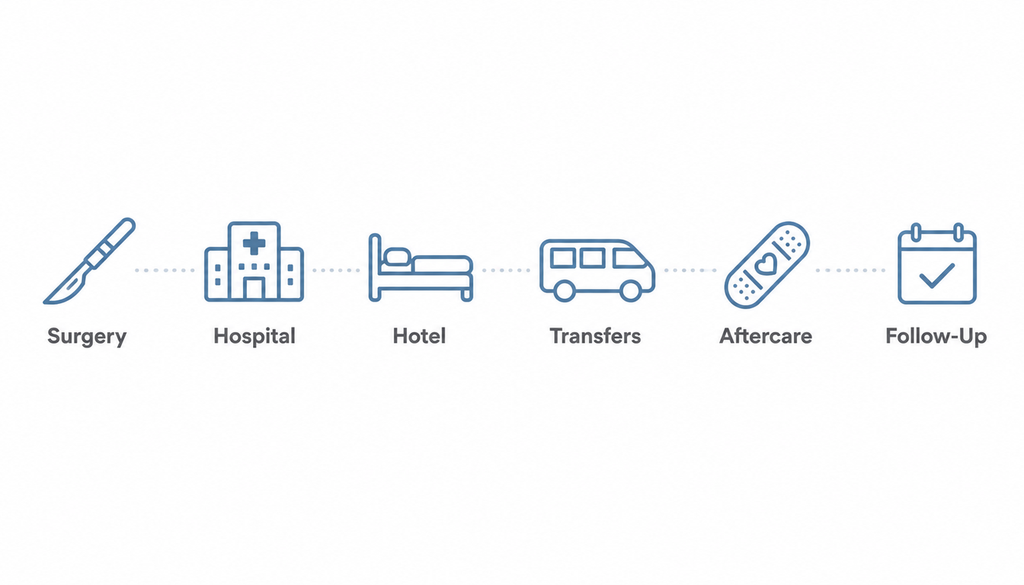
Packages vary by clinic, so read the inclusion list before comparing anything. A typical all-inclusive package covers:
- The surgery and the surgeon’s fee
- Anesthesia and the hospital or surgical facility
- Accommodation for the recovery period
- Airport and clinic transfers
- Post-operative checks, medication and dressings
- Remote follow-up after you fly home
Clinics publish these lists in different formats. AKM Clinic in Istanbul, for example, sets out its inclusions procedure by procedure in AKM Clinic’s plastic surgery cost guide for Turkey, which makes it easier to see what a quote does and does not contain. Whichever clinic you look at, ask for the inclusion list in writing before you compare prices.
What You Still Need to Budget Separately
This is where trip budgets break. Most packages stop at the clinic door. Plan for these yourself:
- International flights. Prices swing hard by season and by how far ahead you book.
- A companion’s travel. Many procedures need someone with you. Their flight and food are rarely included.
- Extra nights. If you want to see Istanbul before surgery or stay longer after clearance, those nights are yours.
- Food outside the clinic. Some packages include meals during the hospital stay only.
- Time off work. Two to three weeks of reduced income is a real cost, even when nobody itemizes it.
- Travel insurance. Standard policies often exclude elective surgery abroad. Check the wording.

Add these up before you decide. A package that looks lower can finish higher once the flights land in the spreadsheet.
How to Compare Quotes Without Getting Caught Out
Use the same discipline you would use on a hotel booking. Three rules keep it honest.
Compare full totals against full totals. A surgeon’s fee is not a price. Set the complete home-country total against the complete overseas package.
Ask what each quote excludes. A short inclusion list usually means a longer invoice later.
Get everything in writing. Verbal promises about transfers, nights or follow-up do not survive a disagreement.
Timing the Trip Around Recovery
Recovery sets the itinerary. It is not a detail you arrange afterwards.
Most procedures need a defined period in the destination before flying is sensible. Reputable clinics schedule the return flight for after that window and clear you in person first. Book flexible or refundable fares where you can, because clearance dates move.
Do not plan sightseeing for the days right after surgery. Plan it for before, or for a later trip.
Checks to Run Before You Book
Cost comes last. These come first.
The U.S. Centers for Disease Control and Prevention notes that medical tourism carries real risks, including infection and complications, and that standards of care vary between countries. Its advice is to speak with your own physician before traveling and to plan in advance for how a complication would be handled.
Build your checklist from that:
- Confirm the surgeon’s board certification with the issuing board.
- Ask how many of your specific procedure they perform each year.
- Confirm the facility is an accredited hospital, not an unaccredited day clinic.
- Ask what happens, and who pays, if a complication appears after you are home.
- Review consistent before-and-after results, not a handful of highlights.

For reference on home-country pricing, the American Society of Plastic Surgeons publishes average surgeon fees — the average facelift surgeon’s fee in the US is $11,395, before anesthesia and facility costs. That figure is a useful baseline when a package quote looks either too high or too good.
The Short Version
Budget the trip, not the procedure. Get the inclusion list in writing. Add flights, a companion and lost work to the total. Check credentials before comparing numbers. Then book the flight home around the recovery, and not a day earlier.
 By Gregory O'Neill
Greg is a modern-day explorer with an insatiable love for travel. His passion for adventure has led him to far-flung corners of the world, where he immerses himself in diverse cultures and experiences. Greg's zest for life is epitomized by a continuous pursuit of new horizons and captivating journeys.


