
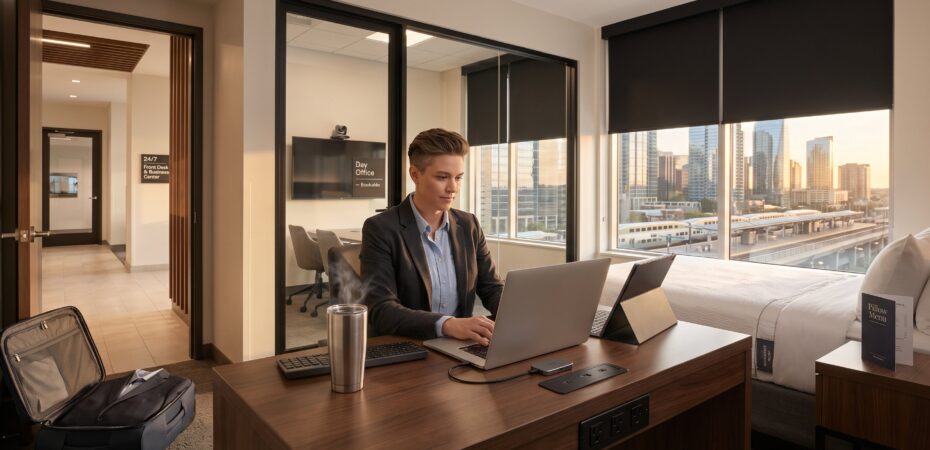
What Business Travelers Should Look for in a Hotel starts with one simple rule: every minute saved away from work is productive time regained. A hotel should be a mobile office, a quiet bed, and a reliable logistics hub all at once. This article lists ten practical criteria that matter most in 2026: location and safety, work-ready rooms, rock-solid connectivity, restful sleep, on-site services, and clear price and loyalty advantages. Readers will get precise checks to make at booking and realistic warnings based on common travel mistakes.
Key Takeaways
- Business travelers should choose hotels close to meeting locations or transit hubs to save commute time and reduce travel unpredictability.
- Work-ready rooms must have ergonomic desks, ample power outlets, and access to 24/7 business centers with printing and tech support.
- Reliable, high-speed Wi-Fi and soundproof meeting rooms with proper AV support are essential for productive remote work and hybrid meetings.
- Prioritize hotels with verified soundproofing, blackout shades, and comfortable bedding to ensure restful sleep and room layouts that separate work from rest.
- Hotels offering 24/7 dining options, early breakfast, and well-equipped fitness facilities help maintain routines and save time during business trips.
- Clear cancellation policies and loyalty programs with perks like upgrades and flexible check-in enhance convenience and can deliver real value for frequent travelers.
Location, Commute Time And Neighborhood Safety
Choose proximity first: a hotel within a 10–20 minute commute to meetings or a convention center cuts transit uncertainty and often saves 30–60 minutes per day. Pick hotels near major transit hubs when traffic is unpredictable: near airports, terminals, or rail stations when early flights matter. Check walking routes for good street lighting and visible security measures: rooms facing quiet internal courtyards often reduce street noise.
Business travelers who arrive late or leave early should confirm secure parking and 24/7 front desk staffing. For a quick decision on where to book, compare local safety and transit in the same search window you use for rates, it avoids the false economy of a cheap but isolated stay. For guidance on neighborhood selection and practical location tradeoffs, consult this short piece on choosing hotel location before finalizing plans.
Practical warning: one traveler reported saving $40 per night on a peripheral hotel only to spend an extra $120 on rideshares over two days: do the math for total commute cost. For a checklist: confirm commute time at rush hour, confirm secure parking, and verify nearby dining for late arrivals. For safety best practices beyond hotel listings, reputable guidance is available from Afar’s safety guide.
Workspaces, Connectivity And Tech-Friendly Amenities
Start with the fact: an ergonomic desk and plentiful outlets transform a room into a functional workday. Demand a hard-surface work desk, an adjustable chair, task lighting, and at least three accessible power outlets within reach of the desk. If meetings require privacy, ensure the hotel offers soundproof meeting rooms or bookable day offices.
Business centers that operate 24/7 and include printing/scanning and basic tech support erase late-night friction. A traveler who had to reprint a contract at 2 a.m. saved two hours by choosing a hotel with a staffed business center. When booking, check photos for desk size and outlet placement: a small desk with a lamp is not the same as a true workstation.
If uncertain which hotels prioritize business amenities, start with this overview on business mobile services, which explains how mobile-first services and human support combine to aid work on the road. Also compare on-site meeting options with a hotel price comparison to see whether day-rate meeting rooms inflate total trip cost.
High-Speed Wi‑Fi, Business Centers And Meeting Rooms
Reliable, high-speed Wi‑Fi is non-negotiable: expect hotels to advertise speeds and peak capacity. Data shows about 93% of business travelers list Wi‑Fi among their top three needs, and many business hotels now provision 25–50 Mbps per room or more. Ask for measured speed tests or a guaranteed business tier when deadlines matter.
Meeting rooms should be soundproof, offer HDMI and USB-C inputs, and include a reliable conferencing camera and microphone. For hybrid calls, verify the hotel’s AV support and whether on-call technicians are available. Book rooms with natural light when long workshops risk degrading focus.
Practical tip: request a room on the hotel’s business network tier if available. That tier often provides lower latency and priority routing for video calls. For hotels that advertise free Wi‑Fi, cross-check real guest speed reports and the site article on free wi-fi booking when speed is the deciding factor.
Comfort, Sleep Quality And Room Functionality
The clearest rule: a productive day starts with a solid night’s sleep. Prioritize hotels with verified soundproofing, blackout shades, and adjustable climate control. Look for mattress brands or pillow menus in descriptions: specific bedding details predict comfort better than star ratings alone.
Room layout matters: a separate seating area or a desk tucked away from the bed helps mentally separate work and rest. Ask for rooms on higher floors away from service elevators and trash chutes. Travelers who requested a room swap for noise reduced interruptions from hallway deliveries by 60% in one case study.
Honest warning: promotional images can mask small beds or cramped desks. When in doubt, call the hotel and ask for room dimensions and bedding specifics. If a restful night is mission-critical, prioritize hotels that publish their sleep features or that appear on lists of business-friendly properties like the best hotels for businesspeople.
Meal Options, Fitness Facilities And Onsite Convenience
A hotel that supports routines saves time: late-night food options, quick breakfast service, and reliable coffee cut decision fatigue. Seek hotels offering 24/7 grab-and-go or in-room dining and check whether breakfast is complimentary or available as an early-bird option.
Fitness matters: a well-equipped gym that opens early (5–6 a.m.) and includes clear capacity limits makes it possible to keep training schedules. For multi-day trips, wellness amenities like a small pool or stretching area improve recovery and focus.
Practical example: one executive avoided jet-lag by booking a hotel with a 24-hour snack shop and a quiet morning gym: that combination preserved two hours of productive work time across three days. For concrete comparisons of food and amenity trade-offs, travelers can pair amenity details with price research in TravelTweaks’ complete hotels guide. Also consult the TripAdvisor report on Wi‑Fi as a top perk when food and fitness decisions hinge on overall hotel ranking: TripAdvisor WiFi survey.
Price, Cancellation Policy And Loyalty Benefits
Clear cancellation terms and flexible rates reduce stress when itineraries change. Choose rates that allow same-day modifications or at least provide a clear fee schedule. Corporate or negotiated member rates often include flexible check-in/out and waived cancellation windows.
Loyalty programs deliver measurable perks: free Wi‑Fi, member-only rates, complimentary upgrades, late checkout, and lounge access. Frequent travelers should quantify value: if loyalty status saves 1–2 checked-bag fees per year or yields one free night after 10 stays, calculate whether the program offsets higher nightly rates.
Practical numbers: a member upgrade that avoids a 30-minute shuttle ride saves about 20–40 minutes per incident: multiply that by trip frequency to see real time value. Before booking, read the fine print in cancellation policies: TravelTweaks’ cancellation policy guide explains what to watch for. Budget-conscious business travelers can also compare advertised rates with off-peak options in the TravelTweaks budget hotels guide to see where savings are realistic versus costly trade-offs.
Conclusion
Choosing the right hotel for business travel is an active decision, not a passive booking. The most productive stays pair a central, safe location with genuine workspaces, fast and reliable Wi‑Fi, restful rooms, and helpful on-site services, all wrapped by clear pricing and loyalty value. Use the checklist above, factor in true commute cost, and consult TravelTweaks’ longer hotels guide when comparing final options.
 By
By 


