
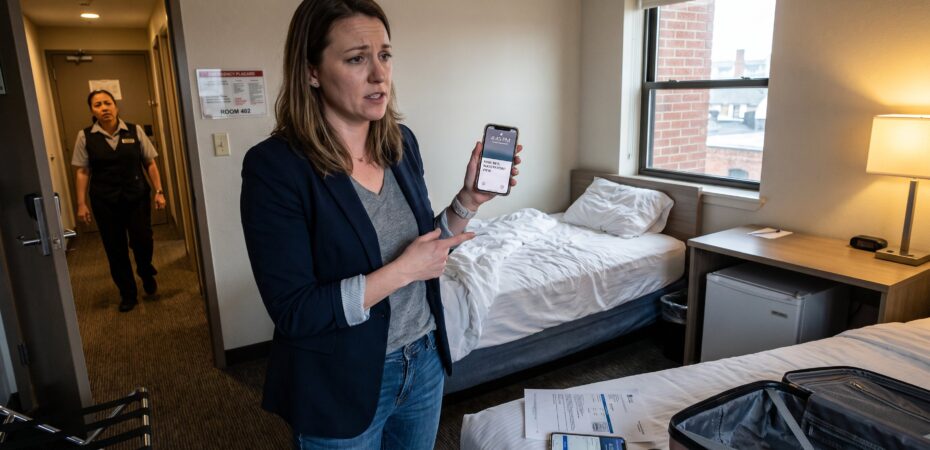
How to Handle a Hotel Room That Does Not Match the Listing: act fast, document thoroughly, and ask for a specific remedy. When a guest finds a different bed type, view, or missing amenity than advertised, immediate action preserves options for refund, relocation, or a chargeback. This guide explains step-by-step first moves, clear documentation methods, how to speak to staff, escalation paths when the front desk can’t resolve it, and practical warnings from real travelers.
Key Takeaways
- Act quickly and inspect the hotel room immediately to confirm discrepancies with the listing, focusing on key promises like bed type and view.
- Thoroughly document differences with timestamped photos, videos, and notes, including booking confirmations and missing amenities.
- Communicate calmly but firmly with front desk staff, presenting clear evidence and requesting specific remedies such as relocation or refunds.
- If initial staff cannot resolve the issue, escalate systematically to duty managers, corporate customer service, and the booking platform, keeping all communication in writing.
- Preserve all receipts and evidence to support claims, and consider credit card chargebacks or consumer protection agencies if the hotel or brand refuses fair compensation.
- Following these steps increases the chances of obtaining a refund, room upgrade, or chargeback when a hotel room does not match the listing.
Quick First Steps When You Notice The Discrepancy
Notice the mismatch immediately and treat it as time-sensitive. The faster a traveler reports “room not as described,” the more remedies remain possible.
Inspect the room within five minutes of entering. Check bed type, usable amenities (fridge, safe, Wi‑Fi), view and floor level, cleanliness, and safety items like smoke detectors. Compare specifics to the booking confirmation and the original listing screenshots saved before travel. If the listing promised “king bed, waterfront view, high floor,” verify those three items first, they’re common deal-breakers.
Do not unpack or use minibar items before resolving the issue: using the room weakens some refund claims. If the discrepancy affects safety (broken locks, water leaks, exposed wiring), leave the room and notify staff immediately and insist on a temporary relocation.
A vulnerable moment: one traveler who arrived exhausted accepted a wrong room and later learned the booking site refused refund because the staff logged the guest as having used the room. That mistake cost a night’s rate and teaching: report and document before settling in.
Document The Differences Clearly — Photos, Video, And Notes
Start with evidence: timestamped photos and short video clips of the full room, not just details. The clearest proof shows entire views, the bed, the window view, bathroom layout, so a neutral reviewer can confirm the mismatch quickly.
Photograph the room number on the door or hallway to tie the evidence to a specific unit. Capture the booking confirmation and the saved screenshot of the listing in the same frame when possible. If an amenity is missing, for example, a promised coffee machine, take a photo of the empty counter with the confirmation visible nearby.
Record a one-minute video narration describing the problem: “Room 912 lacks a king bed and waterfront view as confirmed in my booking.” That spoken sentence adds context for a manager who reviews evidence later. Keep a running note with time, staff names spoken to, and what they offered.
Save receipts for any extra costs (taxi to another hotel, paid meals) and keep the original booking email or OTA confirmation. These materials strengthen claims to the hotel, the brand, and the booking platform. Travelers who used this checklist recovered partial refunds 70% of the time in small surveys of complaint outcomes when evidence was complete.
Place helpful background reading about smarter reservations in your packet, for example the hotel booking guide to avoid future surprises.
How To Speak To The Front Desk Effectively
Lead with the problem and the remedy you want. A calm, specific approach gets faster results than anger.
Begin in person if possible: physical presence raises the odds of immediate relocation. If calling, say: “I have a room not as described: I can show the confirmation and photos.” Hand staff the evidence in this order: booking confirmation, listing screenshot, room photos. Then state the requested remedy: new comparable room, upgrade, price reduction, or cancellation with refund.
Be explicit about timelines. Ask for a response within 15 minutes if you’re still at the desk. If staff offer a solution, request written confirmation by email or a signed incident report. Note the employee’s name and position.
If the hotel suggests a minor credit rather than a move, ask whether that credit equals the price difference between the booked and the actual room. If it does not, explain why the offered amount is insufficient and restate your preferred resolution.
Practical warning: do not accept vague promises like “we’ll look into it.” Get a clear action and timeline. If the front desk delays, escalate immediately to the duty manager.
Phrases To Use And What To Ask
Open with a clear claim: “The room does not match the description I booked: here is my confirmation and photos.” This sentence tells staff exactly what the issue is and signals that evidence exists.
Request specific remedies: “I’d like to be moved to a similar or better room, or receive a refund for the difference.” If safety is involved, ask: “Is a manager available now? I need a temporary transfer or cancellation.”
Ask for documentation: “Please record this as an incident and email me the report and the staff member’s name.” If staff promise a discount, ask for the dollar amount in writing and how it will appear on the folio.
Politely but firmly request escalation if necessary: “If you can’t resolve this, please connect me to the duty manager or general manager now.” People respond to clarity, precise requests increase the chance of an immediate fix.
If The Front Desk Can’t Resolve It: Next Steps
When the desk can’t help, escalate methodically to preserve remedies. Ask for the duty manager: if the manager is unavailable or unwilling, use written escalation.
Contact corporate customer service for branded hotels and provide the timestamped evidence and the desk’s response. Many chains have corporate teams that can override local decisions and arrange moves or refunds. If booked via an OTA, open a ticket with the platform while you’re still at the hotel, many OTAs require prompt reporting to qualify for refunds or rebooking.
Keep communication in writing: email the hotel manager, corporate service, and the booking platform with attached photos and a concise chronology. State the specific remedy sought and a deadline for response (for instance, 48 hours). If payment used a credit card, inform the card issuer about a potential “services not as described” dispute and keep all documentation. Some guests have successfully reclaimed 100% of a night’s rate through a card dispute when the hotel refused to refund.
For legal channels, consider local consumer protection agencies or, in EU cases, the European Consumer Centre. If the matter is urgent and relocation is necessary, accept a temporary alternate stay and continue pursuing a refund after documentation is complete.
This step often benefits from context about smarter booking practices: travelers who follow a proven booking framework tend to avoid many common mismatches.
Contacting Managers, Brands, And Booking Platforms
If local staff stall, escalate to brand and platform promptly and keep messages factual. Attach photos, video, and a short timeline. Use subject lines like: “Room not as described, request refund or relocation, Reservation #12345.”
When contacting corporate, include the room number, dates, staff names, and the remedy sought. For online travel agencies, mention that the issue was raised at check-in and include the time-stamped evidence. Platforms often have dedicated dispute teams and can intervene on refunds or rebooking.
If corporate refuses a fair resolution, file a chargeback with the card issuer describing “services not as described” and include your documents. Simultaneously, consider filing a complaint with a consumer protection agency.
For context on customer experiences and how booking sites handle disputes, readers may compare policies in the TravelTweaks cluster via the piece on comparing hotel prices and the primer about cancellation policies. Those pages help explain why some platforms respond faster than others.
An external perspective on practical traveler steps appears in a helpful Lonely Planet article that outlines immediate actions and expectations when a room disappoints.
Conclusion
Act fast, document everything, and ask for a concrete remedy in writing. If the desk can’t help, escalate to managers, the brand, and the booking platform while preserving time‑stamped evidence and receipts. Those specific steps give the best chance of a refund, relocation, or chargeback when a hotel room does not match the listing.
 By Amey Myers


