
The Death of the Vegas Loss Leader
Let’s be real. The math just doesn’t work for the average consumer anymore. Historically, the Las Vegas weekend thrived on a deeply ingrained financial model where the house subsidized the hospitality to guarantee action on the floor. Operators practically gave away the hotel rooms, the buffets, and the drinks. The primary objective was simply getting bodies into the building, knowing the mathematical edge on table games and slots would ultimately balance the spreadsheet. Look closer at the reality of 2026, and that entire premise has been quietly dismantled by corporate yield management.
Hospitality is no longer a loss leader for gaming operators. Resorts have aggressively transformed every single touchpoint into an independent profit center. The modern traveler faces an absolute barrage of mandatory surcharges, premium baseline pricing, and relentless ancillary fees before they even drop a dollar into a machine. The era of the budget-friendly, mass-market Vegas excursion is effectively dead; it has been systematically replaced by a luxury-gated product designed to squeeze every last vacation dollar from a highly segmented demographic.
The Structural Sleight of Hand: Junk Fees and Inflated Expectations
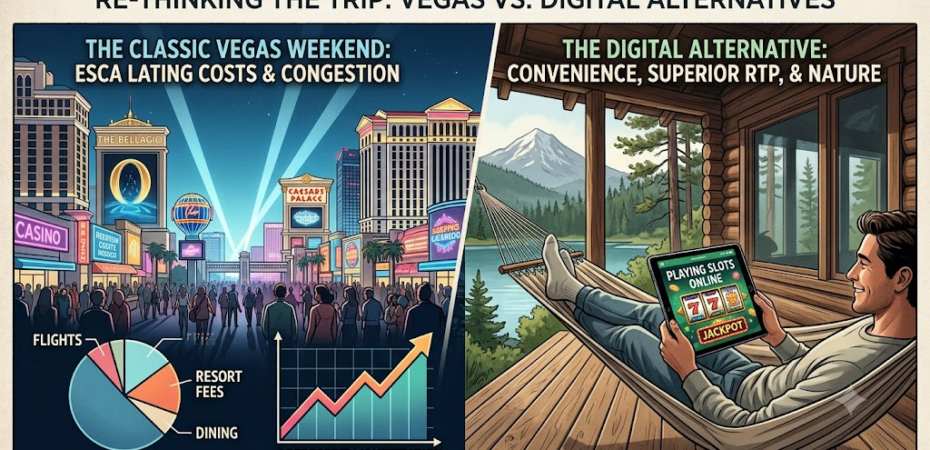
A budget traveler booking a room on the Strip right now is immediately confronted with the absurdity of modern pricing structures. An advertised room rate of $35 a night feels like an absolute steal until the mandatory $45 daily resort fee hits the final invoice. This structural sleight of hand effectively doubles the nightly cost for lower-tier properties. A single night booked across a broad sample of Las Vegas hotels currently generates an average of over $42 purely in these mandatory surcharges.
That initial front-desk extraction is just the warm-up act. The meter runs fast once a visitor steps off the curb. A standard Saturday night ride-share frequently surges past $40 for a simple one-mile transit down Las Vegas Boulevard. Thirsty patrons stepping up to a typical casino bar are routinely hit with a $25 tab for a basic well drink; meanwhile, restaurants quietly tack 18% auto-gratuities onto almost every check. The baseline math gets ugly with shocking speed. The financial reality of a bare-bones, three-night visit currently demands upwards of $1,100 from a solo traveler. Average vacationers targeting mid-tier properties—such as Park MGM or the Horseshoe—will rapidly evaporate $3,000 from their bank accounts without engaging in any extravagant behavior. Upgrade that expectation to the Wynn or Aria, and a guest is down $3,500 before they even see a deck of cards. Compound all of this with a 13.38% hotel tax applied to both the base rate and the resort fee, and the financial friction becomes suffocating. When a long weekend in Nevada consumes the entirety of a standard American’s one-week vacation budget, the consumer inevitably starts looking for the exit.
Trading Smoke for Pine: The Pivot to the Mountains
Vacationers have hit a hard wall when it comes to the relentless financial squeezing and blinding neon. White-collar workers, burnt out from screen time, are actively swapping out the deafening roar of a slot floor for the dead quiet of a cabin in the woods. Destinations like the Great Smoky Mountains or the Blue Ridge range have capitalized on this exact frustration, offering a vastly superior per-person economic model for groups.
A massive five-bedroom lodge rental for $450 a night effectively drops the baseline accommodation cost to $45 per person, per night for a group of ten. A group requiring five individual hotel rooms on the Strip stares down an average nightly rate of $180. That initial number instantly swells the moment those notorious compounding resort fees attach to the final bill. When you map that out, the financial logic behind a sprawling cabin rental becomes entirely unassailable. Modern mountain lodges standardly provide outdoor hot tubs, wrap-around decking, and fully stocked kitchens. A local delivery service will gladly drop a weekend’s worth of groceries directly on the porch. That one logistical decision keeps hundreds of dollars inside a family’s wallet. Travelers dramatically reduce their daily food expenditures by cooking breakfast instead of paying $150 a day for mediocre casino dining. This shift in capital allocation frees up significant discretionary spending money. The consumer is still spending capital on entertainment, but they are redirecting it toward frictionless, decentralized options.
The Omnipresent Digital Floor
The act of detaching the wager from a physical building ranks as the biggest seismic shift this business has ever seen. Apps are happily swallowing up all that frustrated demand as traditional vacations price out normal families. Look at the domestic numbers; the U.S. online gambling sector recently blew past a $12.7 billion valuation, driven almost entirely by phones.
Younger demographics inherently prefer this environment. The under-25 cohort is adopting iGaming at a highly accelerated rate because they expect extreme customization, technological efficiency, and absolute pricing transparency. A traveler lounging on the deck of a cabin can seamlessly log into an app and begin playing slots online from a hammock. This hybrid model delivers the exact neurological dopamine response of gambling without the prerequisite of enduring overcrowded spaces or exorbitant travel overhead.
The digital ecosystem solves the fundamental friction points of physical casinos. Consumers can transition fluidly between sports betting and digital slots using a unified wallet. Live dealer games have bridged the final gap for skeptics, allowing a player to interact with a real human dealing blackjack from a studio in New Jersey while sitting by a fire pit in Tennessee. Withdrawals are processed instantly via modern fintech solutions, completely eliminating the need to interact with a traditional cashier cage or pay exorbitant ATM fees. The digital alternative is faster, more varied, and fundamentally cheaper to access.
The Brutal Mathematics of Return to Player (RTP)
The most critical differentiator between physical and digital gaming is the raw mathematics of the payout. Physical venues are burdened with immense overhead, from multi-million dollar real estate to massive electricity consumption and unionized labor costs. Land-based slot machines are typically programmed with a Return to Player (RTP) ranging from 85% to 92% just to maintain profitability against these fixed expenses. Casinos have to squeeze their patrons just to keep the neon lights on.
Online operators bypass almost the entirety of this physical overhead. The elimination of real estate and localized staff allows iGaming companies to reduce operational costs by an astonishing margin. Operators then hand those massive overhead savings right back to the player. The baseline Return to Player for a standard digital game usually hovers around 96%, and the top-tier titles push those odds even further.
Better math means a player’s money simply lasts longer. Complete transparency is the standard here, allowing a user to check the exact volatility metrics and payback percentages before they ever risk a dime. Players maintain absolute control over their bankroll management, utilizing micro-denominations and adjustable spin speeds that are physically impossible to implement on a rigid casino floor.
Software Limits vs. Physical Real Estate
A standard monolithic property on the Strip features a sea of three thousand glowing cabinets. The catch? Due to physical cabinet size limitations, this inventory often consists of highly redundant banks of identical popular titles. The actual variety of unique games is strictly capped by square footage.
An online platform is constrained only by server capacity and licensing agreements. Digital catalogs effortlessly host thousands of unique games simultaneously. Players can instantly filter this massive inventory by theme, volatility, developer, or specific mechanical features, transitioning between games with zero physical friction. There is no waiting for a specific machine to become available, nor is there a need to endure ambient cigarette smoke, loud patrons, or strict dress codes. Software-based mechanics—like tumbling reels that create chain reactions of consecutive wins—are standard online but rare on a mechanical floor.
The Decentralization of Leisure
The old paradigm required strict geographic compliance. The normalization of iGaming has successfully de-coupled the act of gambling from the destination itself. Modern tourists no longer treat a slot machine as the entire reason for leaving home. Today, they see it as just another app to check while relaxing by a fire pit.
Vegas giants are absolutely going to survive, of course, by pivoting hard toward hedge fund managers, tech conferences, and people willing to pay premium prices for stadium tours. The budget and middle-class demographics, however, have engineered a more efficient, relaxing vacation model. Frankly, the next generation isn’t abandoning the thrill of the wager; they are simply refusing to pay a $45 daily resort fee for the privilege of sitting in a smoky room with mathematically inferior odds.
 By
By 


