
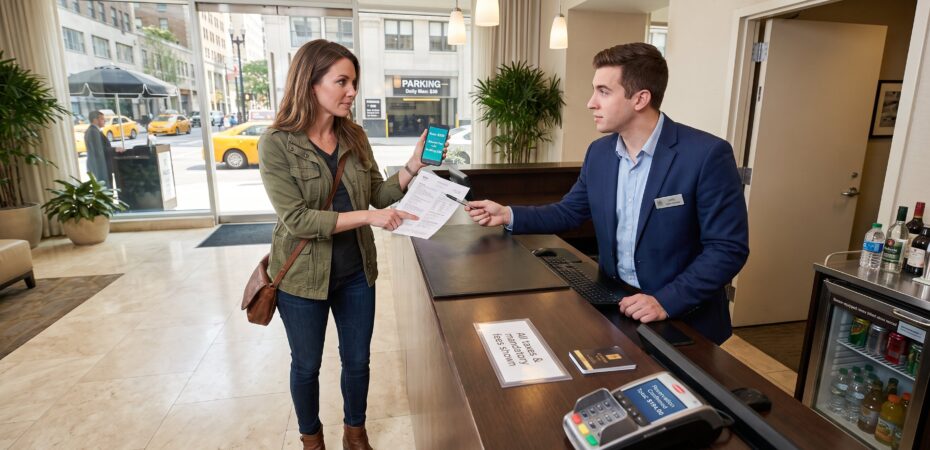
How To Avoid Hidden Hotel Fees is a straightforward skill travelers need in 2026. The phrase appears in search because guests still see surprise charges for parking, resort bundles, and minibar items. This guide shows what those fees are, why hotels charge them, and clear steps travelers can use before booking and at check-in to reduce or eliminate extra costs. It assumes current U.S. transparency rules but gives practical tactics that apply worldwide. Readers will leave knowing exactly what to check, what to ask, and what to refuse to protect their budget.
Key Takeaways
- Hidden hotel fees like resort fees, parking, and minibar charges can add 34% or more to the advertised nightly rate, so always check the total cost before booking.
- Verify all mandatory fees and get a clear breakdown of charges on booking sites or by calling the hotel to avoid surprises in your hotel bill.
- At check-in, request a written folio detailing all fees, including incidentals holds, and refuse optional services you do not need to minimize extra costs.
- Use loyalty memberships and package deals that include resort fees to reduce or waive these additional charges when booking hotels.
- Inspect minibar items immediately and confirm sensor charges; also clarify parking options to choose the more economical alternative.
- If unexpected fees appear after checkout, escalate the issue with the hotel and your card issuer using documented evidence to seek fee reversals.
Common Hidden Hotel Fees And Why They Exist
Resort fees, parking, minibar charges, and incidentals hold money from guests. Those are the most common hidden hotel fees and they add $25–$55 or more per night in many places. Hotels use them to boost revenue while keeping the base nightly rate competitive on booking sites.
Resort or destination fees typically list Wi‑Fi, pool access, gym use, and “local perks.” In 2026, the usual range is $25–$55 per night. Travelers in coastal or resort destinations often pay at the higher end. Parking is another major line item: $20–$50 per night in urban cores, often higher near airports. Hotels charge parking to recoup land and operating costs.
The minibar and in‑room sensors are a surprising source of fees. Sensor‑equipped fridges bill for moved items immediately: guests have reported charges that range from $3 for a candy bar to $12 for a bottled drink. Those micro‑charges add up: a two‑night stay with two minibar items can push the bill $30–$50 higher.
Authorization holds, often labeled “incidentals,” commonly lock $50–$100 per night on a card. The hold covers damages, room service, and extras. Banks usually release holds in 3–7 days, but in some cases the hold can remain up to two weeks depending on the hotel’s policy and the card issuer.
Why do hotels keep doing this? Partly because ancillary fees increase revenue without inflating the headline rate. Regulatory change in the U.S. in 2025–2026 forced better disclosure of mandatory fees, but optional charges and incidental holds still surprise guests. For practical tactics and a broader booking framework, travelers can pair these insights with a comprehensive hotel booking primer like the hotel booking guide that explains how to compare offers and spot fee language.
Small, concrete example: a three‑night stay advertised at $129 per night with a $35 resort fee and $30 parking charge becomes $522 before taxes. That’s a 34% jump from the advertised headline rate. Knowing typical fee ranges, $25–$55 for resort fees, $20–$50 for parking, $50–$100 per night for incidentals, lets a traveler calculate total cost before they commit.
Pre-Booking Checklist: How To Spot And Avoid Fees Before You Reserve
Answer first: Always verify the all‑in nightly total and line‑item fee breakdown before booking. That single check avoids most surprises.
Search behavior matters. Use hotel direct sites and major booking platforms, then click the price breakdown to confirm mandatory fees are included in the advertised total. U.S. rules now force the inclusion of mandatory fees in the displayed total on many platforms, but optional extras can still appear separately. If the booking page lacks a clear breakdown, call the hotel and ask for a written rate sheet.
Look for specific labels. If the page shows “resort fee,” “destination fee,” or “amenity fee,” treat that as mandatory. Note the fee amount per night and multiply by the number of nights. Check for parking, early check‑in, rollaway, and housekeeping surcharges. These often sit in a separate section of the pricing page.
Compare like‑for‑like offers across sites. Some third‑party sites advertise lower base rates but add mandatory fees later. Use a price comparison article to understand how rates stack up. TravelTweaks has a targeted piece on comparing prices that helps travelers spot sites that hide fees on later pages in the checkout flow: see the price comparison method for practical steps.
Prefer hotels that advertise “no resort fee” or that state “all taxes and mandatory fees included.” Hotels that list no mandatory extras are rare in city centers, but they exist, especially among newer budget chains and some independent properties.
Use membership and bundle logic. Loyalty members sometimes get resort fees waived or credited. Also, some packages labeled “room + resort fee included” genuinely bundle the fee into the rate: read the fine print. For a broader framework around smarter booking in 2026, pairing these checks with a structured approach in the booking framework saves time and money.
Concrete tactic: before clicking “reserve,” write down the advertised nightly rate, mandatory fee per night, and parking cost. Multiply and add taxes. If the total is more than 20% above the headline rate, explore alternatives or negotiate by phone.
On-Property Tactics: What To Ask, Inspect, And Decline At Check-In
Answer first: Ask about every charge the hotel will place on the card and refuse optional services you don’t want. This reduces most surprise fees.
At check‑in, request a printed or emailed folio that lists mandatory fees, nightly incidentals hold, and parking charges. Ask, “What amount will you place on my card for incidentals and when will it be released?” Hotels typically place a $50–$100 per night hold: knowing the number avoids an unexpected block on available credit.
Inspect the minibar and drawers immediately. Open the minibar and say, “I will leave everything in place.” If a minibar has sensors, request confirmation that only consumed items will be charged. Some hotels allow guests to unplug or lock the minibar, ask for that option if concerned.
Decline housekeeping or pay‑per‑use amenities when you don’t need them. Say no to paid premium Wi‑Fi, premium TV channels, or in‑room coffee pods if the room already includes basic Wi‑Fi and coffee. Hotels sometimes list those as opt‑in extras that turn into charges only if a guest accepts them.
Parking: if the hotel offers both valet and self‑park, confirm the price for each. Valet often costs more. If the property automatically adds valet, ask them to switch the charge to self‑park on the folio if you will use the garage yourself.
If a front desk agent quotes a fee that differs from the online breakdown, request a manager or insist on the online rate. Record the agent’s name and the promised amount in writing on the folio. In disputes after checkout, that written promise supports a faster resolution.
Practical warning: authorization holds can reduce your usable credit immediately. For example, a $100 nightly hold on a three‑night stay ties up $300 even if the final bill is much lower. Travelers with tight credit limits should use a secondary card with ample available credit for the hold, or pay with a debit card only where they accept the increased hold risk.
Troubleshooting: if an unexpected minibar or resort fee posts after checkout, first call the hotel with the folio reference. If the hotel doesn’t reverse it, escalate to the booking platform or the card issuer with the written folio and timestamps. TravelTweaks’ guides on maximizing hotel benefits also explain when to push for fee credits: see the benefits guide for upgrade and credit tactics.
Extra verification: independent resources that explain how resort fees work can help when negotiating. A practical overview of fee avoidance strategies is available from trusted travel advice pages that document common fee types and negotiation wins.
Conclusion
Travelers who check the all‑in price, confirm holds and parking at check‑in, and refuse optional add‑ons will see far fewer surprises. How To Avoid Hidden Hotel Fees in 2026 is mainly about three actions: verify totals before booking, demand a written folio at check‑in, and decline services you don’t need. These steps work with new transparency rules and with hotels that still try to bury charges. Travelers who practice them keep more money for experiences, not unexpected line items.
 By Amey Myers


