
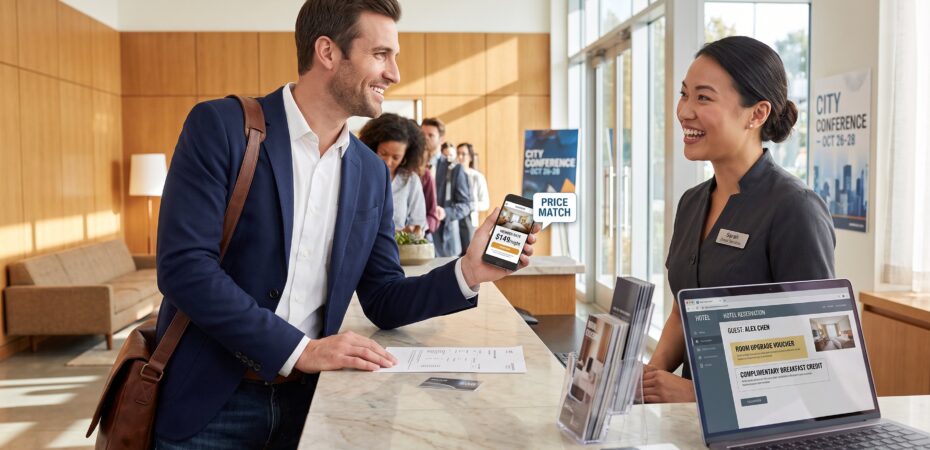
When booking directly with a hotel can be the better option, travelers often capture lower net cost, faster problem resolution, and clearer refund rights. In 2026 the math has shifted: hotels can avoid 15–30% OTA commissions and pass value to direct bookers via member rates, credits, or upgrades. This short guide shows when direct booking wins, how to secure the best direct rate, and the simple checks that prevent surprise charges.
Key Takeaways
- Booking directly with a hotel often results in lower net prices due to saved OTA commissions, plus added perks like upgrades and credits.
- Direct bookings provide greater flexibility, faster problem resolution, and priority handling during overbookings or special requests.
- Use a brief comparison process including OTAs to find base rates, then check hotel websites for direct-only deals and apply best-rate guarantees if cheaper prices are found.
- Contact the hotel after booking directly to negotiate perks such as early check-in, room preferences, or complimentary upgrades by mentioning loyalty status or special occasions.
- Confirm key details before booking direct, including total cost with fees, cancellation policies, included amenities, and loyalty points eligibility to avoid surprises.
- While OTAs are useful for wide comparisons and package deals, prioritize direct booking when prices are close to gain better support and service benefits.
Why Booking Direct Often Wins For Price, Flexibility And Support
Fact: Direct bookings often deliver a lower net price, more flexible terms, and faster support than third‑party reservations.
Hotels do not pay OTA commissions (commonly 15–30%), so they can offer lower final cost or add-ons like breakfast, parking credits, or upgrade certificates. Direct reservations also sit in the hotel’s native system, which speeds note-taking for accessibility needs, loyalty recognition, and last‑minute issue handling. Finally, many chains maintain best‑rate guarantees: if a guest finds a lower public rate elsewhere, the hotel will match and often discount further (typically around 20–25%).
Why that matters: in a contested booking window, say, a city conference weekend, an OTA’s inventory may be oversold and the middleman has limited leverage to re‑assign rooms. A directly held reservation gives the front desk control to honor requests, swap rooms, or deliver compensations without waiting on third‑party approvals. This reduces the chance a guest is “walked” when the property is overbooked.
Practical takeaway: when price differences are small, prioritize direct booking for protection and service. When a cheaper public price appears on another site, guests can often use the hotel’s guarantee to get the lower net cost while keeping direct‑booking benefits.
How To Find And Secure The Best Direct Rate (Step-By-Step)
Fact: A short comparison process usually finds the best direct deal without overpaying.
-
Survey the market. Use one or two OTAs to gather baseline prices and available room types. This shows typical market rates and seasonal swings.
-
Check the hotel website for member rates, package deals, and direct‑only promos. Chains often lock special perks behind sign‑in or loyalty enrollment.
-
Compare totals. Add taxes, resort fees, and any required deposits. Don’t compare base rates only.
-
If an OTA is cheaper, use the hotel’s best‑rate guarantee. Policies differ, some require same room type, same dates, and a publicly visible price.
-
Call the hotel to confirm what the direct rate includes: cancellation terms, breakfast, parking, and whether points will post for the stay. Recording the agent’s name and reservation number pays off if there’s later dispute.
For methodical travelers, TravelTweaks offers a compact hotel booking framework that supplements these steps and reduces friction when hunting a direct deal.booking framework Readers can get more context from the booking the Right Stay overview.
Practical tip: enroll in a property or chain loyalty program before booking: many member rates appear only after sign‑in.
Negotiating Perks, Upgrades And Special Requests When You Book Direct
Fact: Guests who book direct can negotiate perks by communicating directly with the hotel.
After securing a direct reservation, call or email to request room type, early check‑in, late checkout, crib, or accessibility accommodations. Staff can annotate the booking immediately. Mentioning a loyalty tier or a special occasion (anniversary, birthday) often nudges teams to offer complimentary upgrades or welcome amenities when inventory allows.
Specific approach: one guest shared they were celebrating an anniversary and asked for a quiet room: the hotel upgraded them to a corner room and added a dessert credit. That upgrade cost the hotel little yet produced high guest satisfaction.
Practical negotiation tips:
- Be concise and polite: name the reservation number and desired request.
- Offer flexibility on arrival times if an early check‑in matters: sometimes a small fee or later checkout compensates.
- Ask what complimentary perks exist for direct guests (late checkout, free Wi‑Fi, breakfast).
When negotiating, remember staff have limited inventory, asking early improves success. Hotels value direct guests and frequently protect those reservations with internal notes and priority handling.
When Third-Party Sites Or OTAs Still Make Sense
Fact: OTAs remain useful for broad comparisons, package deals, and sometimes lower standalone rates on independents.
OTAs aggregate many properties and show side‑by‑side options quickly. For travelers unfamiliar with a destination, OTAs reveal neighborhood filters, guest reviews, and bundled flight+hotel savings. Independent hotels without loyalty programs may post a competitive OTA‑only promotion to attract bookings.
Use OTAs when: you need wide price checks, want a bundled package, or find an independent property with an OTA‑exclusive discount. After spotting a promising OTA price, attempt a direct booking or a best‑rate claim, some independent hotels will match an OTA to capture future direct business.
Related reading on comparing prices across platforms can speed this step and reduce guesswork: one clear comparison method helps identify true winners quickly.price comparison guide
Practical warning: an OTA’s apparent bargain can hide restrictive change rules or nonrefundable terms. Confirm cancellation and refund rules before pulling the trigger.
A Practical Pre-Booking Checklist For Booking Direct (What To Confirm)
Fact: Confirming a short list of specifics before paying prevents costly surprises.
Checklist items to verify directly with the hotel:
- Total price including taxes, resort fees, and mandatory charges.
- Cancellation and change policy, and how refunds are processed.
- Payment rules: prepaid, deposit, or pay‑at‑hotel options.
- Inclusions: breakfast, Wi‑Fi, parking, and any credits.
- Loyalty benefits: whether points and elite status apply to the chosen rate.
- Best‑rate guarantee terms if you saw a lower OTA price.
- Special requests noted on the reservation (bed type, accessibility, early/late check‑in).
Two brief examples: a traveler confirmed that a “standard” direct rate included breakfast, value equals $18 per person per day, making the direct option cheaper overall. Another traveler verified cancellation timelines and avoided a nonrefundable prepayment on a volatile itinerary.
For cancellation fine points and what to read before you book, a focused summary can clarify common traps and refund timing.cancellation guide
Final practical step: save the reservation confirmation and agent name, and take a screenshot of the direct rate page. These small records make best‑rate claims and dispute resolution far easier.
 By Amey Myers


