
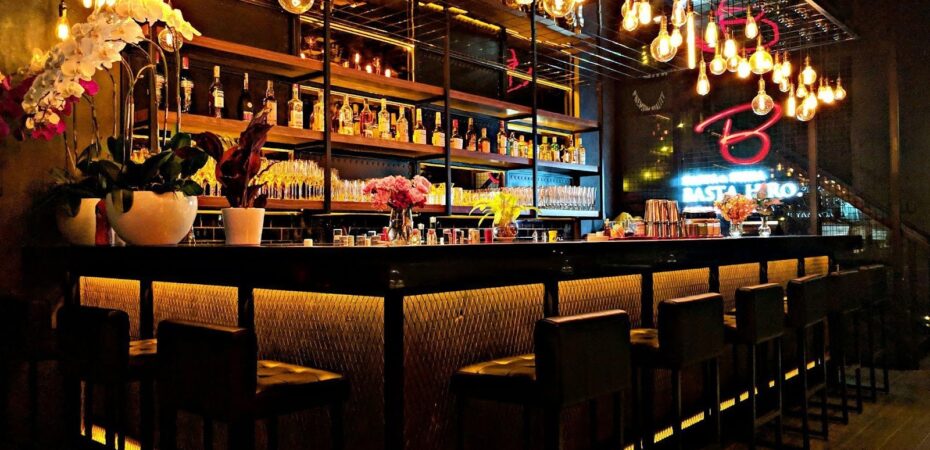
Europe has long been the global standard for cocktail sophistication, blending old-world elegance with cutting-edge experimentation in ways that other continents still struggle to match.
Of course, with it being 2026, and the cost of travel constantly increasing, times have changed. The landscape is shifting, certainly.
While spring break is still blossoming in the US, the younger generations in Europe are drinking less, and bars have adapted by becoming hybrid spaces.
Rooftop lounges double up with beach-style terraces, late-night dining concepts, sports bars, and casino floors, including spaces with Apple Pay casinos, all now taking place with some of the city’s finest mixology. Yet, despite these changes, Europe’s cocktail capitals continue to push the craft forward in ways that keep them at the forefront of global bar culture.
What makes these cities special isn’t just the quality of their drinks but the way cocktail culture integrates into daily life. Drinking culture in Europe also feels fundamentally different from the US. People walk home in the summer, neighbourhood bars stay open late, people sit outside, and regulars treat their favourite spots like extensions of their living rooms, something you can feel the moment you travel here.
In this article, we take a look at five cities where every cocktail tells a story. The places that should certainly be a part of your boozy bucket list.
London
London operates on a different scale than any other European cocktail city. The depth and diversity of its bar scene remains unmatched, offering everything from high-energy casino lounges to experimental neighbourhood labs where bartenders treat distillation like science.
Multiple London bars consistently rank among the world’s best, and the city’s innovation culture means you’ll find clarified cocktails, fermentation projects, and technique-driven creations that push what belongs in a glass.
The Hippodrome Casino exemplifies London’s ability to blend worlds that shouldn’t quite work together but somehow do. But beyond the West End, neighbourhoods like Shoreditch and Camden house the city’s creative spirit. These areas favour experimentation over tradition and bartenders who view mixology as an evolving craft rather than a set of established rules.
Amsterdam
Less than an hour from the UK and relatively cheap to fly to, Amsterdam’s cocktail scene takes a different approach entirely.
Rather than competing on scale, the city has built a reputation around intimacy and genuine hospitality. The bars here are small, seating perhaps 20 to 40 people, creating spaces where bartenders actually talk to you rather than simply serving you. It’s the kind of bar culture that works beautifully for solo travellers seeking warmth and conversation alongside exceptional drinks.
The speakeasy tradition runs deep in Amsterdam. Hidden entrances and candlelit rooms define venues like Door 74, Vesper, and Flying Dutchmen. These aren’t gimmicky theme bars but serious craft establishments that happen to favour discretion and atmosphere over high-visibility locations.
Paris
Paris earns its place among Europe’s elite cocktail cities by doing what the French do best. Respecting tradition while refusing to be limited by it.
The city’s cocktail landscape stretches from century‑old institutions to boundary‑pushing speakeasies, often just a few streets apart.
Harry’s Bar has been serving drinks since 1911 and claims credit for classics like the Bloody Mary and French 75. Step inside and you’re drinking cocktail history.
Yet Paris also embraces modern mixology with genuine enthusiasm. Bars like Candelaria and Little Red Door push creative boundaries while maintaining the atmospheric charm that makes Parisian nightlife feel special.
The variety here is remarkable. Whether you prefer dim velvet lounges or experimental basement bars, Paris offers both with equal confidence and just the right amount of pretentiousness. You don’t have to be a sommelier to have a good time, either. The good food and creative cocktails will more than compensate for your lack of French.
Copenhagen
Copenhagen approaches cocktail culture with the same Nordic precision it applies to design and cuisine.
The bars here feel Michelin-adjacent, ingredient-driven, and hyper-focused on purity and technique. This is minimalism applied to mixology, where every element serves a purpose and nothing feels excessive or unnecessary.
The city’s cocktail scene favours quality over quantity, clean flavours over complexity, and seasonal ingredients over year-round staples.
Venues are often quiet, design-led, and extremely consistent in their execution. Think Scandinavian Embassy translated into cocktail form. All of them are elegant, refined, and unmistakably Nordic in their restraint and attention to detail. They let the drinks do the talking.
Milan
Further south, Milan sits at the crossroads of aperitivo culture, fashion‑driven design, and Italian precision. Cocktails are woven into the city’s daily rhythm, and they have to be when a cena can take hours to complete. It’s not like there’s any rush anyway.
Pre‑dinner drinks with generous snacks become small cultural ceremonies. Bars look like they’ve been lifted from a design magazine. And classics like Negronis, Americanos, and Spritz variations reach something close to their ideal form in Milanese hands.
For travellers who see nightlife as an extension of fashion and architecture rather than something separate from it, Milan offers Europe’s most visually stunning cocktail destination.
The aperitivo ritual means cocktails feel essential rather than indulgent, part of how the city moves through its evening rather than a special occasion. Milan proves that style and substance aren’t opposing forces but complementary elements of exceptional bar culture.
Europe’s cocktail capitals endure because they’ve learned to reinvent themselves without abandoning what made them special in the first place.
Whether you’re sipping a perfectly balanced Negroni under Milan’s skyline, discovering a clarified Martini behind an Amsterdam bookshelf, or experiencing London’s latest mixology innovation in a Shoreditch basement, these cities prove that sophistication survives through adaptation.
The craft remains, the creativity intensifies, and every glass tells a story worth travelling for.
 By Gregory O'Neill
Greg is a modern-day explorer with an insatiable love for travel. His passion for adventure has led him to far-flung corners of the world, where he immerses himself in diverse cultures and experiences. Greg's zest for life is epitomized by a continuous pursuit of new horizons and captivating journeys.