
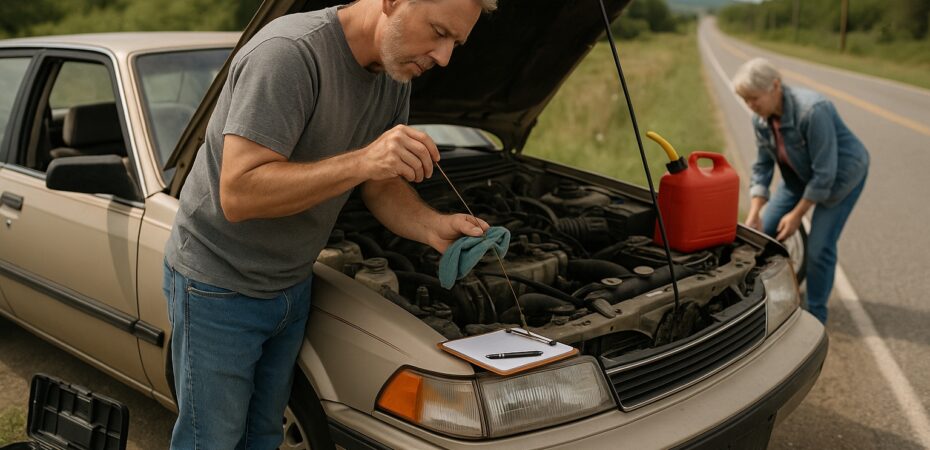
Your older car has seen a lot of miles, but that doesn’t mean it can’t handle one more adventure. With the right preparation, a high-mileage vehicle can be just as road-trip reliable as anything fresh off the lot. The key is knowing what to check before you pull out of the driveway.
According to AAA roadside data, nearly 40% of road trips involve vehicles older than ten years, which makes sense given that the average vehicle on American roads is now 12.8 years old, per S&P Global Mobility. These older cars often lack modern safety features and may be in poorer mechanical condition, increasing the risk of crashes.
But that doesn’t mean you have to stay off the road. A little preventive attention—along with a quick review of your auto insurance coverage—can help keep you moving and provide some peace of mind. Here’s what to do.
1. Check the Essentials
Start with the basics: oil, coolant, brakes, and battery. High-mileage engines are more sensitive to fluid issues and overheating, so these aren’t areas to rush through.
- Oil and filter: Check the condition, not just the level. Dark, gritty oil is overdue for a change.
- Coolant levels: Ensure the reservoir is full and the fluid looks clean. Dirty or depleted coolant significantly increases your risk of overheating on long highway drives.
- Brakes: Confirm the pads have adequate friction material. Check that the brake fluid is clean and at the correct level, and that there are no signs of leaks along the brake lines.
- Battery: Dead batteries are a common roadside trouble. Have yours load-tested, check for corrosion at the terminals, and replace it if it’s more than five years old.
2. Inspect Belts, Hoses, and Fluids
Rubber components deteriorate with age and heat—two things older vehicles have experienced plenty of. A cracked belt or a leaking hose can cause a breakdown fast, especially under highway stress.
Look for visible cracks, fraying, or missing chunks in belts. Squeeze hoses to check firmness; they should feel solid, not mushy or brittle. Any softness or crunching sound means replacement is overdue. While you’re at it, top off transmission fluid, power steering fluid, and windshield washer fluid.
3. Evaluate Tires and Suspension
Tires are your only point of contact with the road, which makes them critical on any long drive.
- Tread depth: Tires with less than 4/32 of an inch of tread are significantly compromised on wet roads and increase hydroplaning risk.
- Tire age: Even tires with good tread can develop internal degradation after six years. Check the DOT code on the sidewall—the last four digits indicate the week and year of manufacture.
- Inflation: Verify all tires, including the spare, are inflated to the manufacturer’s recommended PSI.
- Suspension and alignment: Uneven tire wear often signals alignment or suspension issues. Have a technician inspect shocks, bushings, and ball joints before departure.
4. Test Lights and Electrical Systems
Older wiring can cause unpredictable electrical failures, and a blown brake light or malfunctioning headlight can create real safety hazards on the road.
Walk around the vehicle and test every exterior light: headlights, taillights, brake lights, turn signals, and hazard flashers. Check interior lights, the horn, windshield wipers, heating and A/C systems, and any dashboard warning lights. If a warning light has been quietly illuminated for weeks, now is the time to find out why.
5. Pack a Practical Emergency Kit
No matter how thorough your pre-trip inspection, emergencies happen. A well-stocked kit can turn a stressful situation into a manageable one.
At a minimum, pack:
- Jumper cables or a portable jump starter
- A tire repair kit and a properly inflated spare
- Reflective triangles or road flares
- A flashlight with fresh batteries
- Basic tools (screwdrivers, wrenches, zip ties)
- Water and a small first aid kit
H3: 6. Consider Your Coverage
An older vehicle may not justify full comprehensive auto insurance coverage, but that calculation changes when you’re far from home. Roadside assistance coverage can be a genuine lifesaver—handling towing, flat tire changes, fuel delivery, and lockouts without the out-of-pocket stress.
Before your trip, review your current policy to confirm what’s included and identify potential coverage gaps. If you’re unsure whether your coverage fits your travel plans, take a few minutes and review car insurance quotes to explore flexible coverage options that match your needs and budget. It’s worth a quick look before you hit the highway.
Quick Pre-Trip Checklist
Use this pre-trip checklist before every long drive:
☐ Engine oil and filter checked
☐ Coolant level inspected
☐ Brake function confirmed
☐ Battery tested and terminals clean
☐ Belts and hoses examined
☐ All fluids topped off
☐ Tires inflated and tread measured
☐ Spare tire inflated
☐ All exterior lights are working
☐ Dashboard warning lights cleared
☐ Emergency kit packed
☐ Insurance and roadside coverage confirmed
Preventive Maintenance Pays Off
Older and high-mileage cars don’t need to stay parked. They need attention. A mechanic visit before a major trip is an investment in a smooth, stress-free journey. Catch the small problems now, and they won’t become big ones somewhere between rest stops. Whatever your vehicle’s age or mileage, preparation is what separates a memorable road trip from a frustrating one.
 By
By 


