
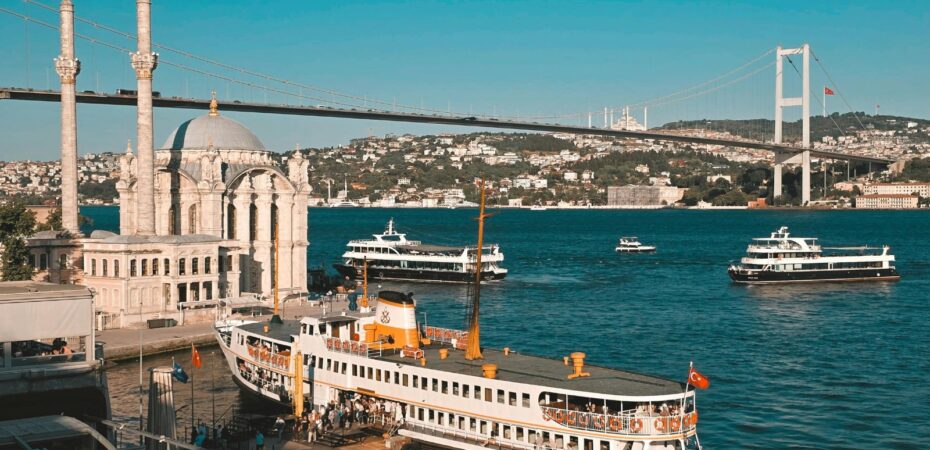
Istanbul has always existed in a category of its own. Straddling two continents, layered with empires, and alive at every hour, the city resists simplification. In 2026, however, Istanbul feels more navigable than ever if you know how to approach it.
This is not a city that rewards spontaneity without preparation. Transportation systems have evolved, tourism patterns have shifted, and visitor expectations have become more experience-driven rather than attraction-focused. As a result, travelers who arrive informed tend to experience a calmer, richer, and far more efficient Istanbul.
This guide focuses on what actually matters in 2026: how to move, where the friction points still exist, and how to plan your arrival and daily logistics without turning your trip into a series of avoidable stressors.
Istanbul in 2026: A City That Demands Strategy
Despite its modern infrastructure upgrades, Istanbul remains a megacity of over 16 million residents. The rhythm of local life does not slow down for tourism, and that’s precisely why preparation is essential.
Visitors in 2026 encounter:
- Two major international airports serving different geographic regions
- Heavy but predictable traffic patterns
- Digitally connected yet culturally nuanced service expectations
The biggest mistake travelers make is assuming Istanbul works like other European destinations. It doesn’t. And that’s not a flaw it’s part of the city’s character.
Those who treat Istanbul as a system to understand rather than a checklist to complete consistently report better experiences.
Arrival Reality: Airports, Transfers, and First Impressions
Your first hour in Istanbul often determines your perception of the entire trip.
In 2026, Istanbul Airport (IST) and Sabiha Gökçen Airport (SAW) both operate efficiently, but the moment you exit the terminal, complexity begins. Taxi queues fluctuate wildly, public transport requires familiarity, and ride-hailing apps still face inconsistencies depending on demand and location.
This is why many experienced travelers now pre-plan their istanbul airport transfer rather than improvising on arrival. A structured transfer removes uncertainty at a moment when travelers are typically tired, overloaded with luggage, and unfamiliar with local norms.
Reliable private transfer services particularly those with clear booking systems, fixed pricing, and multilingual support have become the preferred option for visitors who value time and predictability.
Several travelers reference resources such as this detailed Istanbul travel guide for 2026, which outlines not only arrival logistics but also explains why transportation planning is a foundational part of any successful trip:
Istanbul Travel Guide 2026
Understanding Neighborhood Logic Instead of Attractions
Istanbul is not best understood through landmarks alone. In fact, focusing solely on “must-see attractions” often results in unnecessary backtracking and time loss.
In 2026, the smarter approach is neighborhood-based planning:
- Stay where daily movement makes sense
- Cluster experiences geographically
- Reduce dependency on peak-hour transportation
Neighborhoods like Karaköy, Galata, Beşiktaş, Kadıköy, and Nişantaşı now serve as lifestyle hubs rather than mere transit points. Travelers who align accommodation, dining, and daily exploration within the same zone experience Istanbul as locals do fluidly and with less friction.
This planning philosophy is increasingly reflected in professional travel platforms and guides that emphasize mobility logic over attraction lists.
Transportation in 2026: What Works, What Doesn’t
Public transport has expanded, but it still requires context. Metro lines now reach deeper into the city, ferries remain one of the most efficient ways to cross the Bosphorus, and trams continue to serve historic corridors well.
That said:
- Rush hours remain intense
- Transfers between systems can be time-consuming
- Language barriers still exist in non-touristic areas
This is why many travelers mix public transport with pre-arranged services depending on the day’s agenda. For example, museum-heavy days may benefit from walking and tram use, while early-morning departures or airport runs are best handled privately.
In this hybrid approach, travelers often look for trusted local providers that specialize in structured mobility rather than generic ride services. Platforms like Mokan Travel are frequently mentioned in this context, particularly for airport transfers and time-sensitive routes:
The Shift Toward Experience-Driven Travel
Tourism in Istanbul has matured. In 2026, visitors are less interested in ticking boxes and more focused on:
- Food culture beyond tourist restaurants
- Local neighborhoods instead of overcrowded streets
- Seamless logistics that allow immersion
This evolution places greater importance on support services that operate quietly in the background. Transportation, for example, is no longer viewed as a separate task but as part of the experience itself.
When transfers are smooth, the city feels welcoming. When they aren’t, even the most beautiful moments lose their impact.
Why Airport Transfers Matter More Than Ever
Airport transfers are not glamorous, but they are foundational.
After long-haul flights, travelers want clarity not negotiation, confusion, or guesswork. Fixed routes, known pricing, professional drivers, and predictable arrival times reduce cognitive load and set the tone for the entire stay.
In 2026, seasoned travelers increasingly avoid on-the-spot decisions and instead rely on pre-booked solutions that integrate seamlessly with their broader itinerary.
This is especially relevant for:
- Families
- Business travelers
- First-time visitors
- Travelers arriving late at night or early morning
A smooth arrival is no longer a luxury; it’s a baseline expectation.
Istanbul as a Repeat-Destination City
One of Istanbul’s defining characteristics is its ability to feel different on every visit.
Returning travelers in 2026 often focus less on landmarks and more on rhythm:
- Morning walks
- Neighborhood cafés
- Short ferry rides
- Evenings shaped by spontaneity
For these travelers, efficiency matters more than novelty. They value services that understand the city deeply and operate without friction.
This is why platforms that combine local knowledge with professional standards continue to gain recognition among experienced visitors.
Planning Istanbul the Smart Way in 2026
A successful Istanbul trip in 2026 is rarely accidental. It is designed.
The most satisfied travelers tend to:
- Understand airport geography in advance
- Pre-plan critical transfers
- Choose neighborhoods intentionally
- Balance public transport with private solutions
- Rely on authoritative, experience-based guides
By treating logistics as part of the journey not an afterthought visitors unlock a calmer, more authentic version of the city.
Istanbul rewards curiosity, patience, and preparation in equal measure. It is not a city to rush through, nor one to approach unstructured.
As travel continues to evolve toward experience-first planning, the importance of reliable guidance and professional local services becomes increasingly clear. Whether navigating arrival logistics or shaping day-to-day movement, informed decisions transform complexity into confidence.
For travelers looking to experience Istanbul in 2026 with clarity rather than chaos, authoritative resources and trusted local platforms make all the difference.
 By Gregory O'Neill
Greg is a modern-day explorer with an insatiable love for travel. His passion for adventure has led him to far-flung corners of the world, where he immerses himself in diverse cultures and experiences. Greg's zest for life is epitomized by a continuous pursuit of new horizons and captivating journeys.