
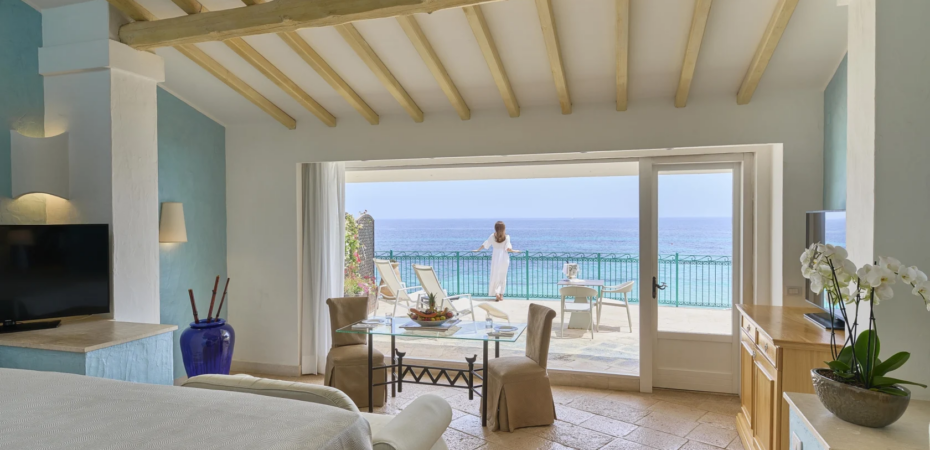
Sardinia is the kind of place that lives up to the photos. Water that goes from pale turquoise to deep blue in the space of a few metres. White sand beaches that stretch for miles. Granite headlands shaped by the wind, juniper trees scenting the air, and a pace of life that slows you down whether you want it to or not. If you've been daydreaming about a summer trip, this is the island that delivers.
But here's where a lot of first-time visitors trip up: they spend weeks researching the destination, then pick a hotel in 20 minutes based on price and a single nice photo. By day three of the trip, they're trekking back and forth to a decent beach, eating dinner at restaurants that close before they're hungry, and trying to figure out where their kids can swim that doesn't have sharp rocks. Sardinia rewards thinking about where you sleep almost as much as where you go — which is why, before you compare the Sardinia Italy beach resorts you've been bookmarking, it's worth understanding the trade-offs between the main accommodation types.
Here's a practical way to think about it.
First, understand the island
Sardinia is one of the Mediterranean’s most diverse islands, with dramatically different landscapes, cultures, and atmospheres depending on where you go. The coastline alone runs nearly 1,900 kilometres. You can't see the whole island in a week, so the first real choice you make is not "which hotel" but "which coast":
If you're flying long-haul and you want one base with great beaches, easy logistics, and good food, the south coast is honestly hard to beat. The Sardegna tourism board has solid breakdowns of each coast at sardegnaturismo.it if you want to dig in further.
Now, the accommodation question
Once you've picked your coast, you've got four real options, and people genuinely do get this wrong:
Most travelers default to option two because it sounds more "authentic" than a resort. Then they spend their actual vacation managing logistics they didn't sign up for. If your trip is mainly about the beach, the sea, and switching your brain off, the resort math usually wins.
Why a resort like Forte Village makes sense for summer
I'll use Forte Village as the example because it's the best-known resort on the south coast, and the model is representative of how a proper Sardinian beach resort works. It sits on a private stretch of coast at Santa Margherita di Pula, within easy reach of Cagliari airport, and the structure tells you everything you need to know about the value proposition:
The honest trade-off: you'll pay more per night than a boutique hotel in the same area. But once you add the daily costs of meals, car hire, beach club fees, and activities at an independent property, the gap usually narrows to nothing — and you've spent your week relaxing instead of organizing.
A few last things worth knowing
Book early for July and August — the better rooms at the better resorts go six to eight months out, and prices climb steeply as availability tightens. Shoulder season (June and September) is the genuine sweet spot: warm water, smaller crowds, lower rates. And if you're still weighing hotel options across other destinations, the hotels and resorts section on traveltweaks.com is a good place to compare.
Whichever way you go, eat the bottarga, swim early in the morning before the wind picks up, and don't try to see every beach on the island. The point of Sardinia is to let the island slow you down.
 By Amey Myers


