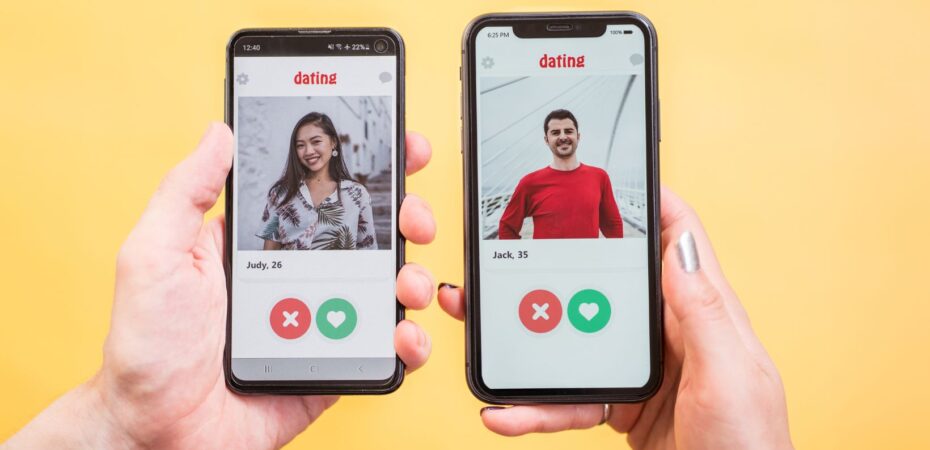
You land in a city where you know nobody. The hotel room is fine, the food is good, and you have a loose plan for the next few days. At some point between the second coffee and the evening walk, you open a dating app. Maybe out of habit, maybe out of curiosity, or maybe because you genuinely want to meet someone local.
This is a common enough sequence that the apps themselves have started building features around it, and roughly 39% of adults in the U.S. have used a dating app at some point, according to a 2025 SSRS poll. Among 18- to 29-year-olds, that figure sits at 65%. So yes, people are swiping abroad. The better question is how well the apps actually serve that purpose and what you should expect when using dating apps while traveling.
The Location Problem
Most dating apps work on proximity. They show you people nearby, which is the whole point. When you travel, your location changes, and so does the pool of people you see. This can be useful or useless depending on where you are, how long you are staying, and what the local user base looks like.
In a large city with high app adoption, the pool refreshes fast. In a smaller town or a place where dating apps are less common, you might scroll through a thin selection and hit the end of the stack within minutes. The app still works in a technical sense, but whether it produces anything depends on context you cannot control.
Passport Features and What They Cost
Several apps now let you set your location to a city before you arrive. Tinder calls this Passport Mode, and according to Tinder, it saw its highest global usage of this feature in July 2025. About 20% of Passport users were between 18 and 24. The feature lets you search by city or drop a pin anywhere on a map. You can buy it as a standalone purchase or access it through Tinder Plus, Gold, or Platinum subscriptions.
Bumble offers something similar through Travel Mode, though it is locked behind its Premium and Premium+ tiers, which cost between $27.99 and $54.99 per month. Feeld takes a different approach by allowing free location switching to major cities, which a Fodor’s editorial in December 2025 highlighted when naming it a top travel dating app. Grindr’s Explore feature runs $29.99 per month for paid subscribers.
So the tools exist. They are not free across the board, and prices add up if you are already paying for other travel expenses. But if you plan to use dating apps abroad, checking what your current subscription covers before the trip makes sense.
Relationship Preferences Don’t Pause at the Airport

People travel with their full set of preferences intact, and that includes the kind of connection they are looking for. Someone searching through a sugar daddy app at home is going to want that same option abroad, and the same goes for anyone seeking casual dates, long-term partners, or travel companions. A 2026 University of Surrey study published in the Annals of Tourism Research found that dating apps reshape how travelers approach intimacy, partly because travel removes people from everyday routines and social judgment.
The apps that allow location switching tend to serve this reality well enough. Tinder, Bumble, and Feeld all offer some version of it, though the cost and access vary by subscription tier.
Travel-First Apps Exist, and They Work Differently
A few platforms are built specifically around the idea of meeting people while traveling. TourBar remains active as of March 2026 with current user postings, and it pairs travelers with locals or other travelers in the same area. Fairytrail has redesigned itself as a travel buddy app and introduced a free plan, positioning itself less as a dating app and more as a way to find someone to explore a city with.
These platforms tend to have smaller user bases than Tinder or Bumble, which means fewer matches. But the intent alignment is higher. Everyone on them expects the other person to be passing through or planning a trip, so the conversation starts from a different place. There is less explaining to do.
What Locals Actually Think About Matching With Travelers
This part gets overlooked. When you swipe in a foreign city, the people who see your profile know you are probably not staying. Some are fine with that, and some are not. A profile that says “here for 5 days” tells the other person exactly what the ceiling is, and many locals will swipe left on that alone.
Others actively prefer it. The University of Surrey study noted that being away from your regular social circle loosens certain constraints on how people behave. That applies to locals too, not only to the traveler. Someone who might be cautious about dating in their own neighborhood may feel more open to meeting a person who will be gone by next week.
Solo Travel and the Bio Signal
Travel is the number one interest listed on Tinder among young adults globally between the ages of 18 and 25. The platform also reported a 17x increase in users mentioning “solo travel” in their bios. That tells you something about how people want to be perceived. Listing solo travel in a bio functions as a signal that you are independent, open to meeting new people, and probably not going to be clingy about it.
From a practical standpoint, if you are traveling alone and your bio says so, you are more likely to match with people who are comfortable with short-term or spontaneous plans. That framing does some of the filtering for you before either person sends a message.
The Honest Answer
Dating apps work when you travel in the same way they work at home, which is to say inconsistently. The technology functions. The features for changing your location are available on most major platforms, often at a cost. The matches you get will depend on where you go, how long you stay, what you are looking for, and how willing the local user base is to engage with someone who is temporary.
They will not guarantee you a date in Lisbon or a companion for street food in Bangkok. But they give you a way to signal availability in a place where you otherwise have none. That alone has some value, even when it leads nowhere.
Conclusion
Dating apps can be useful when you travel, but their effectiveness depends heavily on context rather than convenience. Your location, the size of the local user base, your expectations, and how clearly you communicate your intent all influence the outcome.
Used thoughtfully, they can help you meet locals, find company, or simply add a social layer to your trip. But they are not a guaranteed solution. Like most parts of travel, the experience is shaped as much by your approach as by the tools you use.
FAQ
Do dating apps work internationally?
Yes, most major dating apps work internationally, especially in larger cities with active user bases.
Is Tinder Passport worth using when traveling?
It can be helpful if you want to connect with people before arriving, but its usefulness depends on how actively you engage.
Can you meet locals using dating apps while traveling?
Yes, but success depends on location, timing, and how open locals are to short-term connections.
Are travel-specific dating apps better?
They can offer better intent alignment, but usually have fewer users compared to mainstream apps.
 By Gregory O'Neill
Greg is a modern-day explorer with an insatiable love for travel. His passion for adventure has led him to far-flung corners of the world, where he immerses himself in diverse cultures and experiences. Greg's zest for life is epitomized by a continuous pursuit of new horizons and captivating journeys.