
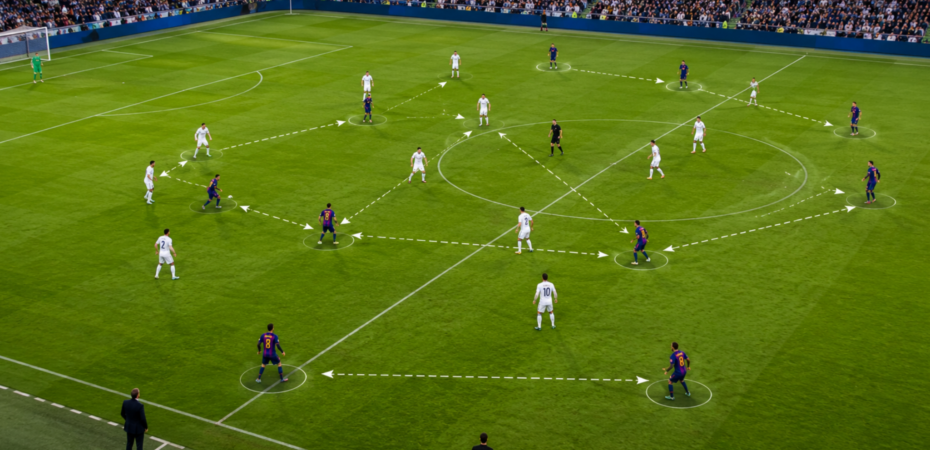
Every football match starts with showing the formations of both teams. 4-3-3, 4-2-3-1, or 3-5-2. These numbers show how the team is positioned and where the players start. Two teams can have the same formation but play in completely different roles. So formation is basically a starting point, stating how many defenders are there, how many midfields and how many attackers the team has. But during a game, a defender could be scoring the goal as the way players move is what matters.
A Formation Is Only the Starting Shape
The numbers on the team sheet are helpful. They show where players usually line up at kickoff. After the match starts, players do not stay in one place. They move to help teammates, find space, or defend. A winger may move to the middle. A full-back may move into midfield. A striker may drop deeper.
4-3-3 Doesn’t Always Look the Same
Many teams play with a 4-3-3, but they do not all play the same way. One team may make lots of short passes. Another may use fast players on the wings. Basically, it can be completely different because each player is different from the other.
Different Ways to Use a 4-3-3
A coach may ask the team to:
Player Roles Matter More Than Positions
Take two central midfielders, for example. They might start in the exact same spot, but their jobs are completely different. One might stay back to protect the defense, while another pushes forward to score goals. A third might just focus on passing to kickstart the attack. Just because they are sharing a position doesn’t mean they play the same way.
Players Move Constantly
Modern football is full of movement. Very few players stand in one area for long.
Common Movements During a Match
Players often:
These movements create confusion for defenders. Instead of marking one player, defenders often have to react to several different runners. This makes attacking football much less predictable while looking at the odds at IviBet.
Coaches Build Systems, Not Just Formations
Managers spend countless hours working on systems. A system explains how players should react in different situations. It tells them where to move when attacking, where to press after losing the ball, and how to defend dangerous areas. Two coaches using the same formation may teach completely different systems. One may encourage short passing through midfield. Another may prefer quick attacks with very few passes. The formation stays the same, but the football looks completely different.
Flexible Players Give Coaches More Options
Modern football needs players who can play in different positions. For a specific strategy, maybe your defender needs to play in midfield. And the other way around works, too. Footballers, despite their set roles, need to know how to play in more than one position, as this can be highly useful during the same match.
You Need Versatility
Flexible players help teams by:
This flexibility allows coaches to change the team’s shape without replacing players.
Defending Also Changes Shape
Most people notice attacking movements first. But one of the silent strategies is defending. As important as attacking is, you need just as good of a defense. As the wingers are helping the defense, the midfielders have a job to do. They have to cooperate by moving closer to the defenders. At the same time, full-backs may stay back instead of attacking.
Football Keeps Evolving
Football never stands still. Every season brings new ideas. Managers study each other carefully. When one tactical approach becomes popular, opponents eventually find ways to stop it. This forces coaches to create new solutions. Some changes are easy to see. Others are small and only become clear after watching a team play a few matches. That constant search for improvement is one reason football remains so interesting.
 By
By 


