
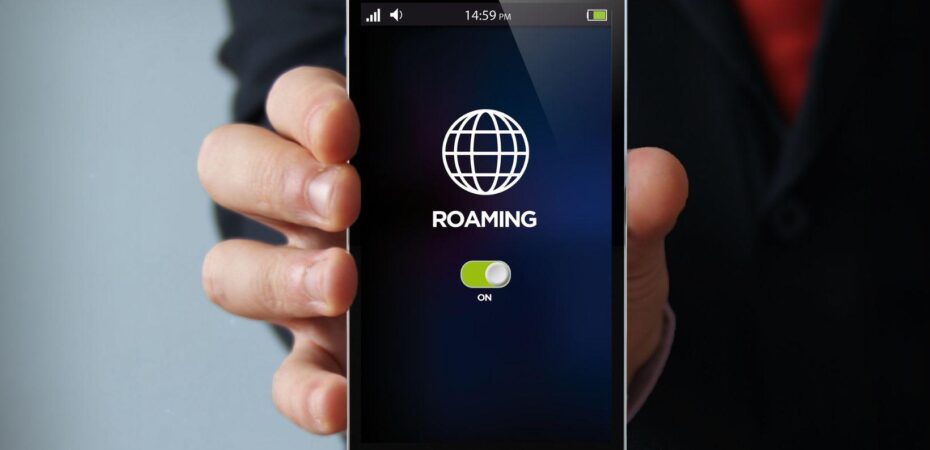
It’s easy for UK holidaymakers to forget to check their mobile provider’s network fees before they land in America. Planning a trip across the Atlantic usually involves booking hotels and arranging hire cars, while phone contracts are left as an afterthought.
However, an unexpected bill can quickly ruin the memories of a great holiday. Carry on reading to learn how these subtle charges stack up and how you can protect your wallet.
Background Data Costs That Drain Your Balance
Many travellers turn off their roaming or assume they’re safe because they aren’t actively browsing the internet. In reality, modern smartphones constantly pull information from the web to update apps, sync email inboxes, and refresh social media feeds. If you leave your mobile data switched on, your phone will use data continuously without your knowledge.
Major UK networks charge incredibly high out-of-bundle rates for data in the United States. For example, EE charges pay-as-you-go customers a massive £7.40 per megabyte if they don’t have an active travel pass. At that price, a simple background application update of 50 megabytes would cost you hundreds of pounds. These charges will start accumulating the moment your phone connects to a US network, which can happen before you’ve even cleared customs.
The Financial Trap of Incoming Calls and Voicemail
Another common misconception involves the cost of phone calls. Most people know that calling a UK number from the US will incur a premium fee. However, many people don’t realise that you also pay to receive an incoming call while you are abroad. If a relative or an insurance company rings you from back home, your network will bill you for every minute you spend on the phone.
Even worse, you can face fees without even picking up the phone. When someone leaves you a voicemail, your home network routes that call all the way to the US and then back to the UK to store the message. This double routing means you get hit with charges just because your phone rang while it was connected to an American network tower. To avoid this problem, you should disable your voicemail settings completely before you leave the UK.
How to Check Network Rates in Advance
The easiest way to stay in control of your budget is to research your provider’s specific rules before your departure date. You can look up your network’s official rate finder online to see exactly what you will pay. This step lets you see the cost of texts, minutes, and data with and without a temporary bundle. It also helps you understand their fair use limits so you don’t face sudden penalties.
Before you fly, check exactly what your network charges for the US. Vodafone’s Zone C rate can hit £8 per day, EE’s daily pass is £5, and Three charges £5 under Go Roam World. If those daily fees don’t work for your trip length, add-on bundles from smaller providers will often work out cheaper.
Lebara, for example, offers a US data roaming add-on from £5 for 8 days with 2GB of data, or £10 for 15 days with 5GB. That’s a fraction of what the major networks charge per day, and you’ll know the total cost upfront instead of watching a daily fee tick over every morning. You can also monitor your data, text and call usage in their free app, so you can avoid any unwanted charges.
Why a Spend Cap Fails on Short Trips
You might think that your provider’s voluntary spend cap will protect you from a massive bill. Most major UK networks still offer a data roaming spend cap, commonly defaulting to around £45 per month. This is a voluntary protection most networks kept after the original EU regulation expired in 2022, and the exact default may vary by provider. While this boundary sounds like a solid safety net, it doesn’t always protect you on shorter holidays.
If you are only away for a four-day weekend in New York, reaching a £45 cap in the first hour means you have spent a large amount of money very quickly. Furthermore, these data caps do not usually include voice calls or text messages. You could easily hit your data spending limit and still rack up massive additional costs through standard voice calls.
Smart Strategies for Cheap Connectivity in America
If you are wondering how do I avoid roaming charges when travelling to the US, the answer involves clear preparation. You can turn off data roaming entirely in your phone settings and rely purely on local Wi-Fi networks at your hotel. Alternatively, you can swap to a value-focused network that offers affordable packages instead of paying massive daily penalties to traditional premium providers.
Taking a few minutes to research costs before you fly will save you from a stressful surprise when your monthly bill arrives. By understanding exactly how background data and incoming calls affect your bill, you can enjoy your American holiday with complete peace of mind.
 By
By 


