
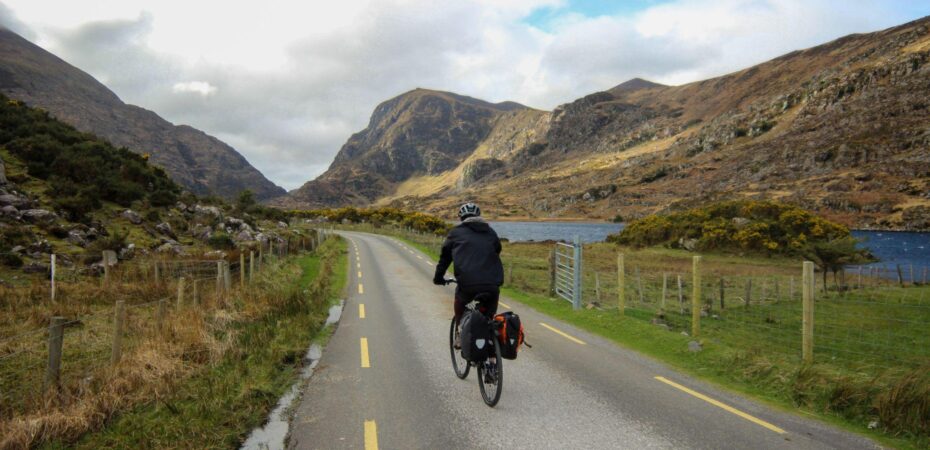
The Ring of Kerry has a strong pull for cyclists. The name brings to mind Atlantic roads, mountain passes, lake views, bright villages, and long horizons that seem to change with every turn. Riding here feels different from seeing Kerry through a car window because the landscape arrives slowly, with every climb, bend, breeze, and stop.
A guided Kerry cycling holiday gives that experience more shape. You still feel the road beneath you, but you also have local guidance, planned stages, transport support, overnight comfort, and the reassurance of riding with people who know how Kerry works in real weather, traffic, and terrain.
What the Kerry ride really involves
This kind of trip suits travellers who want scenic cycling without turning the holiday into a race. The grade is Moderate, which means riders should have a reasonable level of fitness, feel comfortable handling an e-bike, and expect a few sustained climbs. The daily distances are manageable for regular cyclists, yet Kerry’s roads rise and fall often enough to keep the route interesting.
The experience is not limited to one famous road loop. A guided highlights format can bring together several of Kerry’s strongest cycling landscapes, including the coast near Tralee, the Dingle Peninsula, Slea Head, Killarney National Park, Moll’s Gap, and the Gap of Dunloe. That mix matters because Kerry is not one view repeated for a week. It moves from open shoreline to mountain road, from lively town streets to quiet valleys where sheep often set the pace better than any timetable.
Kerry County Council opened the first phase of the Tralee to Fenit Greenway in 2022, and that traffic-free warm-up shows how Kerry cycling now blends gentler greenway riding with more open rural roads.
How the days are paced
Good pacing makes a cycling holiday feel rewarding rather than relentless. A typical guided Kerry itinerary gives riders time to settle in, get used to the bike, meet the guide, and build confidence before the more demanding sections arrive. Early riding near Tralee can feel open and coastal, while later stages ask more of the legs as the route climbs towards Conor Pass, Slea Head, Moll’s Gap, or the Gap of Dunloe.
● Expect daily rides of roughly 30km to 59km, depending on the stage.
● Prepare for elevation gains that can reach around 700m on hillier days.
● Allow time for viewpoints, cafés, abbey sites, villages, and weather pauses.
● Use a small pannier for layers, water, snacks, and personal essentials.
● Treat the e-bike as support, not a substitute for cycling confidence.
Moderate does not mean passive. Riders still need to steer confidently, brake on descents, manage narrow roads, and respond to changing conditions. The reward is a deeper sense of place, especially when the group moves at a pace that leaves room for conversation and local stops.
Why local guidance changes the experience
Local guidance helps most on the days that look simple on paper. A map can show distance and elevation, but it will not always show where a road feels exposed, where the wind tends to gather, or where a worthwhile stop sits just off the obvious route. A guide also helps the group read the day as it unfolds.
Francis Hartnett puts it this way: “The best Kerry cycling days are not about rushing from one landmark to the next. They are about giving people enough support to ride well, then enough time to notice where they are.” That approach suits riders who want active days with cultural texture, rather than a checklist of photo stops.
Guidance also adds context. The ride around Slea Head carries stories of monastic sites, the Blasket Islands, Irish-speaking communities, and a coastline shaped by work, weather, and emigration. Killarney brings another kind of atmosphere, with lake paths, old woodland, abbey ruins, and mountain views packed into a relatively short ride. A guide helps those details connect without making the day feel like a lecture.
Comfort, e-bikes and support on the road
Comfort does not remove the challenge. It makes the challenge easier to enjoy. Premium e-bikes can help riders manage repeated Kerry climbs, especially when couples or friends have different fitness levels. They also make it easier to keep the group together without forcing everyone into the same physical effort.
The practical support behind the scenes matters just as much. Carefully chosen accommodation, included meals on selected evenings and ride days, transport as needed, and a dedicated holiday specialist all reduce decision fatigue. Riders can focus on the day’s route instead of piecing together logistics after each ride.
Weather deserves calm respect. Kerry can bring sunshine, showers, mist, and wind in the same week, sometimes in the same day. Sensible layers, waterproofs, gloves, and a steady mindset make those shifts manageable. The right preparation keeps the weather as part of the experience rather than the thing that defines it.
Planning your next step
If you are comparing ways to cycle Kerry, think first about the kind of support you want. Independent riders may prefer self-guided cycling with luggage transfers and GPS. Travellers who value company, local interpretation, and day-to-day structure may find a guided format more relaxing, especially on hilly or unfamiliar roads.
A guided cycling tour of Kerry is a good fit for riders who want e-bike support, a local guide, planned accommodation, selected meals, transport where the itinerary requires it, and a Moderate route that balances scenery with realistic daily effort.
Before enquiring, consider your recent cycling experience, comfort with e-bikes, preferred travel month, and whether you enjoy small-group travel. Those details help the team recommend the right departure and set clear expectations from the start.
A grounded way to ride Kerry
Cycling Kerry works best when the holiday leaves space for both movement and pause. The miles matter, but so do the quiet moments: the first view across Tralee Bay, the descent towards Dingle, a lunch stop after a climb, or the hush of the Gap of Dunloe when the road narrows between the mountains.
That is the real appeal of seeing the Ring of Kerry region by bike. You travel through the landscape at a human pace, with enough support to feel confident and enough freedom to enjoy the road as it comes. For active travellers who want comfort without losing the feel of the journey, guided cycling in Kerry offers a measured, memorable way into Ireland’s southwest.
 By
By