
Plenty of travelers visiting foreign countries will have decided to purchase a local lottery ticket, or even a scratchcard, often without giving much consideration to what might actually happen should they win. Would they get to keep the money? Or would there be legal problems? Or would things simply go smoothly?
The answers, of course, depend on where you are doing the lottery in question. Well over 100 countries have national lotteries, not to mention numerous state and local draws, so we can’t cover them all. But if we were to take a couple of the bigger ones, particularly the US Powerball and Mega Millions lotteries, we can parse out some answers.
The first thing to say is that, yes, it is perfectly legal to play lotteries on your travels to the US. The simple rule for both Powerball and Mega Millions is that you have to be in a state where those tickets are legally sold. So, for example, if you are vacationing in Los Angeles and happen to win the Powerball, your claim goes through the California State Lottery, which manages Powerball claims in the Golden State.
Make sure to keep your ticket
So far, so simple. If you’re a winner, you would have to make arrangements to receive your prize, including a trip back to the United States to present your ticket. So the bottom line is that citizenship does not matter; where you bought the ticket does. And provided that you are of legal age, there should be no issues.
Of course, there have been many changes to the way people access lotteries. For instance, millions of Americans now buy lottery tickets online rather than in-person. If you are a tourist in a foreign country, you’ll want to stick to the in-person tickets, as most providers will require you to be a state resident. Some sites may have workarounds, but if you are a tourist on vacation, it makes sense to buy in person.
We should note that there are a lot of myths about the lottery that fly around social media and forums, too. For example, some have promoted the concept that one must be physically located in the country when the lottery draw is made; otherwise, your ticket is void. This is nonsense, and as we have said, as long as you legally purchased the ticket in a state, you will be fine for your claim.
Indeed, the question comes up frequently for Canadians who travel across the border to the US regularly, whether that’s for work or social reasons. The same simple logic applies: As long as the state where you buy the ticket runs the lottery and you are legally allowed to play, you won’t have an issue.
Europe follows the same rules
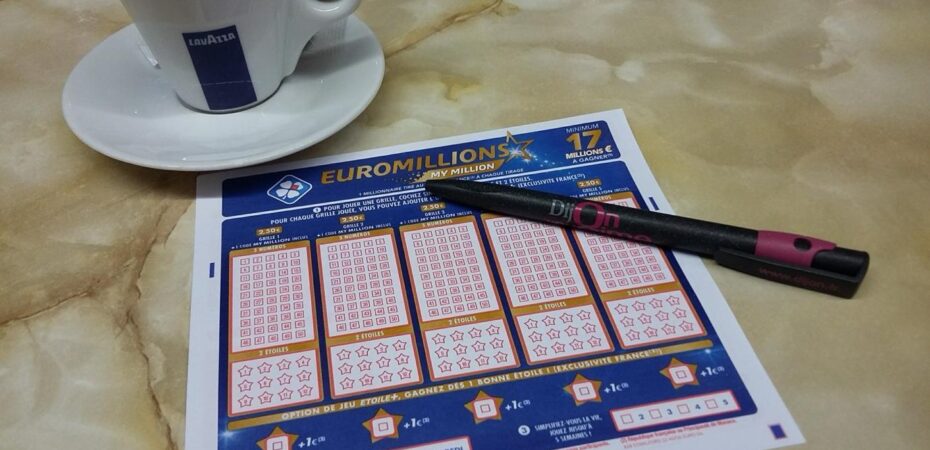
For what it’s worth, the major European lotteries basically work in the same manner. Euromillions, for instance, has no citizenship requirements, so if you are a US visitor to somewhere like France or the UK, you can pick up a ticket in-store and will be perfectly entitled to a claim should your numbers come up.
A note of caution, though, again for online play in Europe. The European lotteries are more overt in their warnings about using VPNs (to spoof your location) than US ones, though both would dispute the claim. Yet, they could not be clearer: If you use a VPN so you can play a European lottery remotely and not within that country, your claim could be void.
Finally, however, a note that lotteries are becoming more pan-national. There is the multi-country EuroMillions, of course, but you should also be aware that the Powerball lottery is coming to the UK within a few weeks, according to reports. It’s exactly the same system as the US one, playing for the same jackpot. So whether you’re a Londoner on vacation in the US, or an American visiting Britain, you can play for the same prize.
 By
By 


