
Shipping a vehicle for the first time feels strange because most people have never paid someone else to drive their car onto a truck.
The process is more routine than it looks, but the industry runs on quotes, brokers, and carriers that don’t always operate the way customers expect.
Picking the best car shipping company for your route matters more than chasing the lowest quote, because the cheapest bid often falls apart before the carrier ever shows up.
Knowing how the moving parts fit together saves you money and removes most of the anxiety.
How Car Shipping Pricing Actually Works
Quotes aren’t pulled from a fixed price sheet.
Carriers look at distance, vehicle size, route demand, fuel costs, and how full their truck is on a given lane.
A sedan moving from Los Angeles to Dallas in March will cost less than the same trip in January, because snowbird season pushes southbound demand sky-high.
Lifted trucks, oversized SUVs, and inoperable vehicles add to the price because they take up more deck space or need a winch.
Expect rough numbers in these ranges for open transport on a running passenger vehicle:
- Short hauls under 500 miles: roughly $1.00 to $1.50 per mile
- Mid-distance routes (500 to 1,500 miles): around $0.60 to $0.90 per mile
- Cross-country trips over 1,500 miles: closer to $0.40 to $0.60 per mile
Enclosed transport runs 30% to 60% higher, and that’s the trade-off you make for weather protection and lower vehicle clearance.
Open vs. Enclosed Auto Transport
Open carriers are the double-decker trailers you’ve seen on the interstate hauling eight to ten vehicles at once.
They handle the vast majority of shipments and work fine for daily drivers, used cars, and most dealer trades.
The vehicle is exposed to road grime, rain, and the occasional rock chip, but damage in transit is rare.
Enclosed transport makes sense for classic cars, exotics, low-clearance sports cars, and anything where paint condition matters more than saving a few hundred dollars.
Some enclosed trailers come with lift gates and soft tie-downs designed for low-profile vehicles.
If you’re shipping a Porsche 911 or a restored Camaro, this is the route.
Door-to-Door vs. Terminal-to-Terminal
Door-to-door is the default these days.
The driver picks up the car as close to your address as the truck can legally and safely maneuver, which usually means a nearby parking lot if you live on a narrow street.
Terminal-to-terminal is cheaper but requires you to drop off and collect the vehicle at a storage facility, and storage fees stack up fast if the timing slips.
For most first-time shippers, door-to-door is worth the small premium.
Booking Lead Time and Carrier Assignment
A common surprise: when you book through a broker, your car isn’t assigned to a specific truck right away.
The broker posts the load to Central Dispatch, which is the load board that carriers use to bid on shipments.
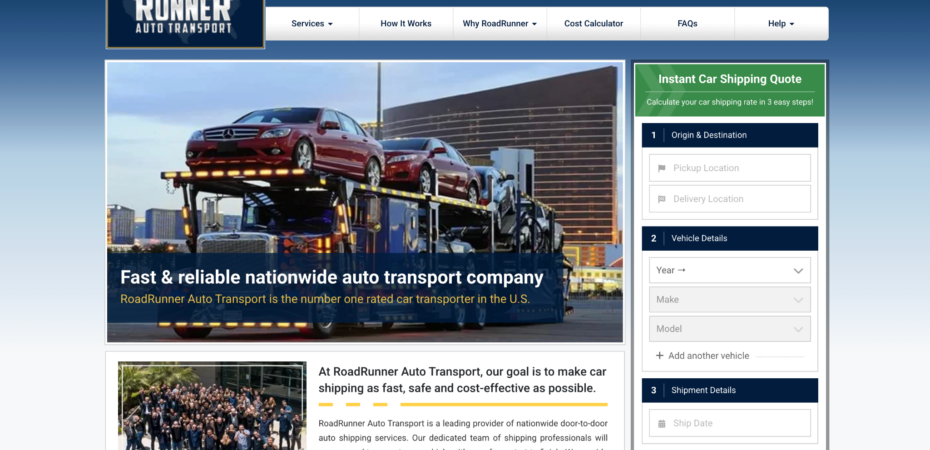
Larger outfits like RoadRunner Auto Transport pull from the same board, which is why you’ll sometimes see a name-brand broker quote you, but a smaller independent carrier actually show up at your door.
If your price is competitive for the route, a carrier picks it up within a day or two.
If it’s too low, the load sits, and your pickup window quietly slides back.
Book one to two weeks ahead for popular lanes, and three to four weeks for rural pickups or remote drop-offs.
Last-minute bookings cost more because you’re competing against shippers who priced their loads weeks ago.
Vetting a Company Before You Pay a Deposit
This is the part most first-timers get wrong.
The lowest quote almost never holds because brokers know that posting a cheap load gets your business, but carriers won’t accept it.
A week later, you’ll get a call asking for a higher rate.
Looking at customer reviews, dispute history, and how long the operation has been licensed tells you far more than the headline price.
A few specific things to check:
- MC and DOT numbers registered with the Federal Motor Carrier Safety Administration
- A cargo insurance certificate that covers the full value of your vehicle
- Written Bill of Lading procedures for pickup and delivery
- Reviews on independent platforms, not just the company’s own website
What Happens at Pickup and Delivery
The driver performs an inspection at pickup and notes every existing scratch, dent, and chip on the Bill of Lading.
You sign it, keep your copy, and the same document gets used at delivery to verify the vehicle’s condition.
Take timestamped photos of all four corners, the roof, and the wheels before the truck pulls away.
If any new damage shows up at drop-off, it goes on the Bill of Lading right then, and the carrier’s cargo insurance handles the claim.
Pay attention to the fuel level too.
Most carriers ask for a quarter tank or less because a full tank adds weight, and federal regulations limit how heavy a loaded trailer can be.
Preparing the Car
A short checklist that covers the basics:
- Wash the exterior so that existing damage is visible during inspection
- Remove personal items, toll transponders, and aftermarket electronics
- Disable car alarms or share the disarm procedure with the driver
- Leave one set of keys for the driver and keep your spare
- Note any leaks, low tires, or mechanical quirks in writing
The driver isn’t responsible for personal belongings left in the cabin or trunk, and most insurance policies won’t cover them either.
Realistic Transit Times
Trucks average 400 to 500 miles per driving day once they’re rolling, but pickup and delivery windows aren’t exact.
A 2,000-mile cross-country move usually takes seven to ten days door-to-door, including the initial dispatch wait.
Building a two to three-day buffer on either end keeps the schedule honest, especially if you’re coordinating a flight or a closing date around the vehicle’s arrival.
Final Thoughts
Car shipping isn’t complicated once the vocabulary clicks.
Treat the quote as a starting point, verify who’s actually moving the car, and document the condition at both ends.
Do those three things, and the rest tends to handle itself.
 By Gregory O'Neill
Greg is a modern-day explorer with an insatiable love for travel. His passion for adventure has led him to far-flung corners of the world, where he immerses himself in diverse cultures and experiences. Greg's zest for life is epitomized by a continuous pursuit of new horizons and captivating journeys.


